DIGI-HEALTH MONITOR Calendar Week 31
DIGI-HEALTH MONITOR: Calendar Week 31, 2026
A hospitalization saved: AI insights help Bayada clinicians intervene sooner
Bayada, a large multi-country home-based care provider operating from more than 370 locations, deployed Mosai Pulse, an AI-enabled real-time intelligence platform that synthesizes EMR data and clinical documentation to flag elevated-risk patients for faster follow-up or care-plan changes. By reducing reliance on manual note-by-note review, the tool supports a shift from reactive to proactive care under staffing constraints. In one documented case, a 75-year-old client with kidney disease and heart failure was escalated to high-risk after rapid 13-pound weight gain; clinicians coordinated with a cardiologist, reinforced patient self-monitoring, and increased check-ins, achieving weight reduction, risk de-escalation, and avoided hospitalization. Leaders frame the platform as helping clinicians practice at the top of their license rather than replacing them, with prioritized risk signals easing documentation and triage burdens. Governance keeps human clinicians fully accountable for all care decisions. Bayada continues applying the platform across home-health and hospice services to reduce avoidable acute-care use and improve outcomes. The main limitation is that impact is illustrated through a single case rather than aggregate measured results.
Sheba Medical Center Partners with OpenAI in First International ChatGPT for Healthcare Deployment
Sheba Medical Center in Israel became the first international hospital to deploy OpenAI’s ChatGPT for Healthcare enterprise-wide, moving beyond isolated pilots. Led by its ARC innovation division, the deployment embeds pre-calibrated generative models that synthesize peer-reviewed literature, clinical guidelines, and internal protocols into daily workflows, with verifiable citations on every output for traceability. OpenAI applies zero-data-retention and non-training guarantees so patient data stay isolated and compliant. More than 1,500 physicians, nurses, and researchers now use the tool under role-based access controls that tailor institutional knowledge to each user’s function, assisting with differential diagnosis, care-pathway suggestions, and rapid literature summarization during rounds. Sheba gains early access to OpenAI’s latest GPT-5-class engines while feeding de-identified clinical feedback back to improve future medical models. Early internal metrics show reduced documentation time and faster evidence access, with formal quantitative outcomes being gathered over a full quarter. A dedicated AI oversight committee reviews high-risk recommendations before they reach the bedside. Next steps involve expanding to outpatient clinics and integrating with the EHR for automated note-taking.
Apollo TeleHealth Crosses 1 Million Teleconsultations Through Keonjhar Digital Dispensary Initiative
Apollo TeleHealth recorded over one million teleconsultations through its Keonjhar Digital Dispensary project in Odisha, developed with the Keonjhar District Health Administration and funded via the District Mineral Foundation. Fixed digital dispensaries in remote mining areas let trained mid-level health workers connect rural patients with urban specialists at central Apollo hubs. The workflow incorporates point-of-care diagnostics, digital vitals monitors, and web-accessible electronic health records; remote physicians evaluate real-time readings, conduct high-definition video consultations, and issue digitally signed prescriptions filled locally. The model expands access for acute and chronic conditions while eliminating substantial travel costs for rural families—a concrete, measured milestone rather than a projection. Operational challenges include sustaining satellite connectivity in rugged terrain, protecting diagnostic hardware from environmental wear, and building digital literacy among patients. Governance runs through joint quarterly reviews by district health officials and Apollo executives evaluating prescription safety and diagnostic accuracy. Next steps involve expanding dispensaries to neighboring mineral-rich districts and embedding automated clinical decision-support tools into point-of-care diagnostics.
The Global Digi-Health Monitor is our weekly published newsletter featuring curated updates on the latest developments in digital health. With a focus on innovation and relevance, it brings together key news across topics such as AI in healthcare, wearables, telemedicine, cybersecurity, and more.
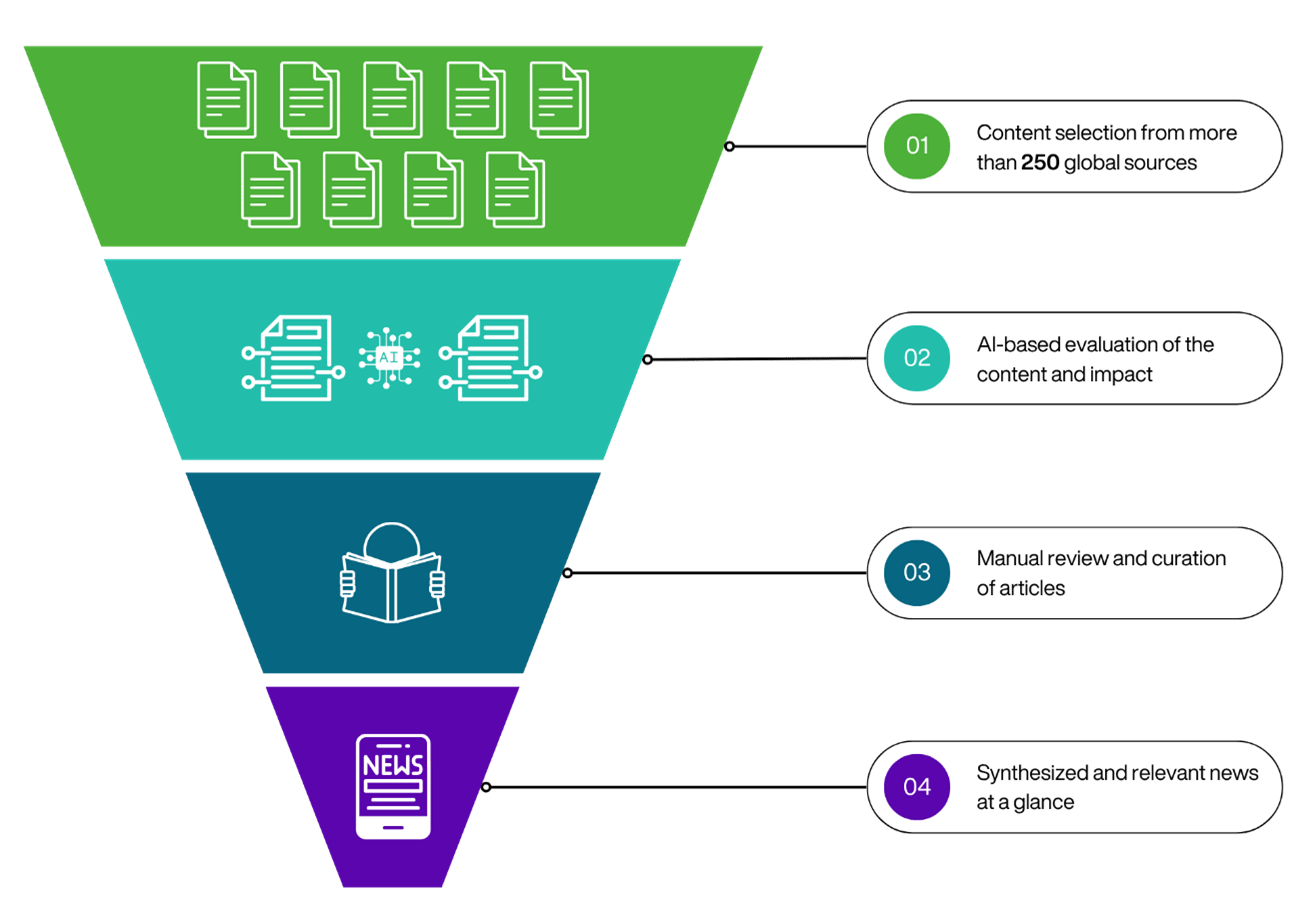
Our process is designed to be both scalable and selective. A broad network of over 250 global sources is continuously screened using six different AI tools. These tools help surface relevant content, which is then passed through a multi-step filtering and evaluation process that emphasizes innovation and impact.
In the final stage, selected articles are reviewed and curated by our team before being published. The result is a dynamic, well-structured view of what truly matters in the digital health ecosystem. This way you always stay ahead of the curve.