DIGI-HEALTH MONITOR Calendar Week 44, 2025
DIGI-HEALTH MONITOR: Calendar Week 44, 2025
AI-Powered Diabetes Prevention Program Shows Similar Benefits to Those Led by People
A landmark study from Johns Hopkins suggests that artificial intelligence may soon play a major role in preventing type 2 diabetes. Researchers found that a fully automated, AI-powered lifestyle intervention app helped adults with prediabetes reach the same CDC-defined health benchmarks as traditional programs led by human coaches. In fact, participants using the AI app were more likely to start and complete the yearlong program, suggesting that flexible, always-available digital tools could overcome common barriers like scheduling conflicts. With nearly 100 million U.S. adults living with prediabetes and limited access to human-led programs, the findings open the door for scalable, personalized care delivered directly through smartphones. The results, published in JAMA and funded by the NIH, raise big possibilities: can AI help close gaps in prevention and reach people who might otherwise never enroll?
Rhode Island Partnership Links Medicaid Data and Public Health Programs, Driving 75% Reduction in Asthma Costs
As chronic conditions such as diabetes, heart disease and asthma steadily rise across the U.S., a new visualization from The Pew Charitable Trusts offers a sobering insight: despite the availability of vast public-health and Medicaid data, much of it remains under-utilised. The piece outlines how state health departments and Medicaid agencies could do far more by sharing and analysing existing data to inform preventive action and improve outcomes. It shows that while preventable illnesses are increasingly common, the infrastructure to turn raw numbers into lives saved is still weak. With powerful opportunities for impact — and lives at stake — the article argues that connecting data to decision-making must become a priority.
Houston Methodist Reports Reduced Mortality Rate Following Deployment of Wearables and AI-Backed Care Traffic Control Center
Houston Methodist has implemented an advanced AI-integrated patient monitoring system that unites real-time wearable data with a “care traffic control center.” The hospital uses predictive analytics to detect subtle deterioration signs and issue proactive clinician alerts. The system led to a documented reduction in hospital mortality rates, confirming tangible clinical impact. It transforms episodic observation into continuous management, allowing earlier interventions and faster escalations. By merging wearable sensors, predictive modeling, and workflow automation, Houston Methodist demonstrates a scalable, measurable, and innovation-rich model for inpatient and remote care coordination. The initiative sets a precedent for predictive hospital operations and upcoming home-monitoring extensions.
Hackensack Meridian Health Pioneers Use of Generative AI Agents for Clinical Documentation Relief
A new report from the American Hospital Association (AHA) highlights three cutting-edge technology partnerships poised to streamline and transform healthcare operations. First, a collaboration between Providence Health & Services and Humana Inc. introduces an advanced data-exchange model aimed at automating payer-provider workflows and improving value-based care. Secondly, GE HealthCare has teamed up with Duke Health and The Queen’s Health Systems to pilot AI-driven bed-management and equipment-utilization software, showing real reductions in emergency department length-of-stay and inpatient wait times. Finally, Google Cloud is deploying generative AI agents to assist hospitals with tasks like clinical note summarization and prior-authorization workflows—offering hope that administrative burdens can be significantly lightened. While still early, these initiatives signal a shift in health systems toward deeper tech-integration and collaboration with major tech players, potentially reshaping how care is delivered and managed.
Aligning with Regulatory Agencies for Digital Health Technologies in Drug Development – A Parkinson’s Case Study
The Critical Path Institute’s WATCH-PD pilot used smartwatches and sensors to collect objective movement data in early PD. It validated digital endpoints against traditional scales, contributing to FDA and EMA qualification pathways. This regulatory-grade real-world use case strengthens evidence frameworks for digital biomarkers, though scalability remains under study.
The Global Digi-Health Monitor is our weekly published newsletter featuring curated updates on the latest developments in digital health. With a focus on innovation and relevance, it brings together key news across topics such as AI in healthcare, wearables, telemedicine, cybersecurity, and more.
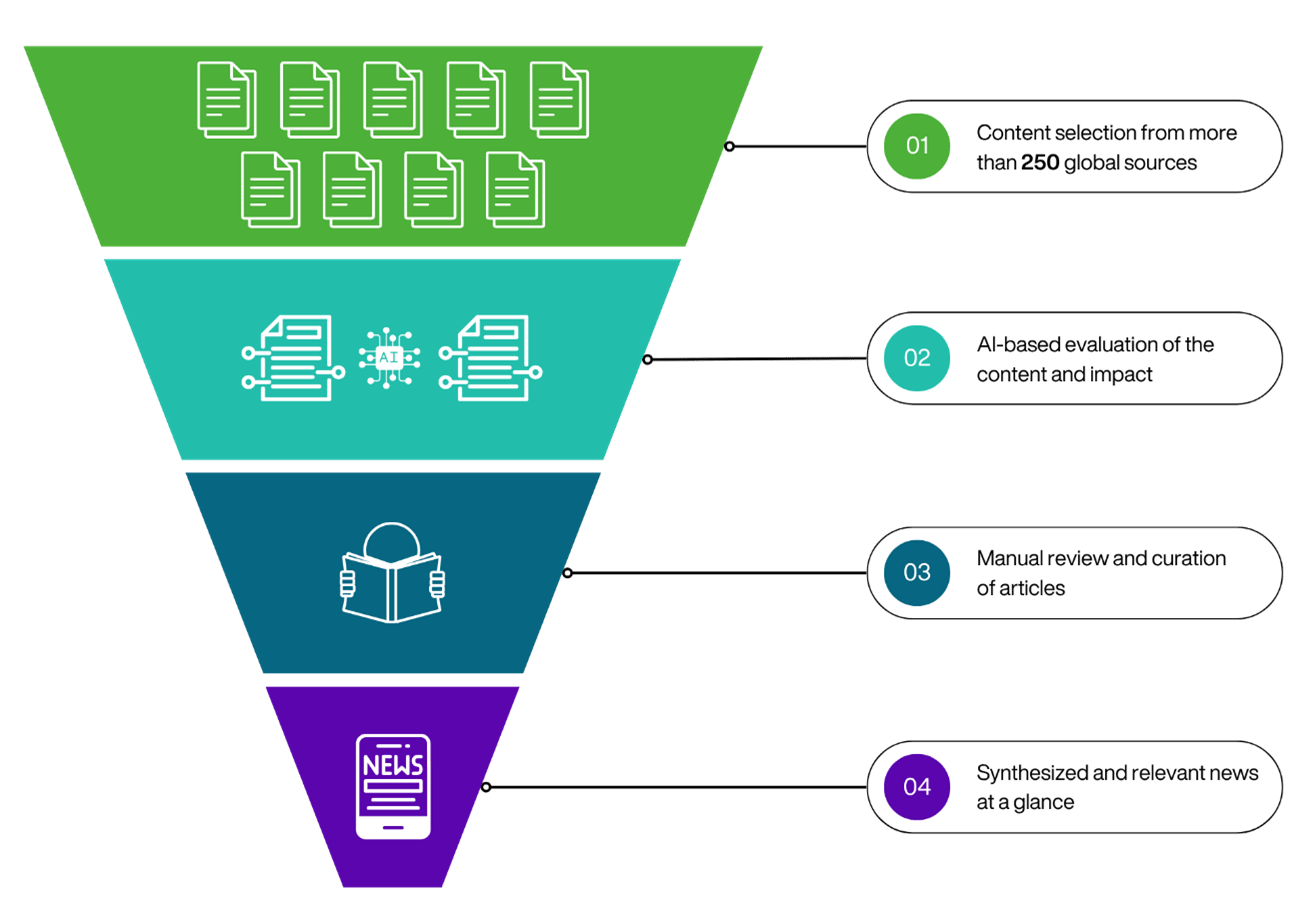
Our process is designed to be both scalable and selective. A broad network of over 250 global sources is continuously screened using six different AI tools. These tools help surface relevant content, which is then passed through a multi-step filtering and evaluation process that emphasizes innovation and impact.
In the final stage, selected articles are reviewed and curated by our team before being published. The result is a dynamic, well-structured view of what truly matters in the digital health ecosystem. This way you always stay ahead of the curve.