DIGI-HEALTH MONITOR Calendar Week 42, 2025
DIGI-HEALTH MONITOR: Calendar Week 42, 2025
Nearly Three in Four U.S. Healthcare Organizations Report Patient Care Disruption Due to Cyber Attacks
A new report from Proofpoint and Ponemon Institute, released on October 8, 2025, delivers sobering statistics on the operational and human costs of cyberattacks in the U.S. healthcare sector. The study found that 93% of organizations experienced at least one cyberattack in the past year, averaging 43 attacks per organization. Critically, 72% of respondents confirmed that at least one incident severely disrupted patient care.
The prevalence of these incidents fundamentally redefines cyber risk as a public health crisis. 61% of surveyed organizations reported increased complications and 36% reported higher mortality following disruptive attacks. Ransomware attacks remain highly prevalent and increasingly costly: 33% of victims paid demands, with the average payment rising to $1.2 million—a 60% increase since 2022.
The most common threat vectors were cloud and account compromises and ransomware. The latter was the attack type most likely to result in longer lengths of stay and the diversion of patients to other facilities. This data underscores the urgent need for health systems to treat cybersecurity investment as a clinical necessity, not just an IT burden.
UK and US Regulators Forge New Collaboration on Medical Technologies and AI
The Medicines and Healthcare products Regulatory Agency (MHRA) of the UK and the U.S. Food and Drug Administration (FDA) announced a strengthened collaboration on October 8, 2025, aimed at streamlining regulatory pathways and accelerating patient access to the latest medical technologies, with a specific focus on Artificial Intelligence (AI). This strategic partnership seeks to foster innovation while ensuring safety and transparency in the rapidly evolving field of AI in healthcare.
A key outcome is the launch of the MHRA National AI Commission, comprised of UK and US experts, tasked with defining the parameters for safe, ethical, and transparent use of AI technologies in clinical settings. The collaboration also introduces new international reliance routes specifically designed to improve international investment and enable UK patients to access medical devices already approved by trusted regulators like the FDA.
This marks a significant move by two major regulatory bodies to harmonize standards and reduce the friction that delays market entry for cutting-edge medical devices and AI tools. Ultimately, the partnership aims to balance fast-tracking innovation with maintaining rigorous patient safety standards.
AI Supported Diagnostic Innovations for Impact in Global Women’s Health
This article, published in the BMJ on October 10, 2025, examines the immense potential of AI-supported diagnostics to address global health inequities, focusing specifically on women’s health. The research highlights conditions like cervical cancer, where screening rates in low- and middle-income countries (LMICs) are critically low—only 11% compared to 84% in high-income countries. AI tools show great promise in diagnostics for cervical cancer, maternal complications (like pre-eclampsia and hemorrhage), and infectious diseases.
However, the study identifies multiple barriers limiting AI’s real-world impact in LMICs. These include severe health system limitations such as unreliable electricity and internet, policy and regulatory uncertainties, financing bottlenecks, and local mistrust of technology. Many AI tools also suffer from an “innovation design mismatch,” being built for high-income settings and losing accuracy in different contexts.
The authors conclude that without investment in implementation (like training staff, strengthening supply chains, and building tailored regulatory frameworks), AI’s transformative potential in these settings will remain unrealized, failing to bridge existing health equity gaps.
OnMed Named to TIME’s List of the Best Inventions of 2025
OnMed’s innovative telehealth CareStation has earned a spot on TIME’s 2025 Best Inventions list under the Medical & Healthcare category. Housed in an 8.5-by-11-foot “clinic-in-a-box,” the OnMed CareStation blends in-person diagnostics with virtual care to expand healthcare access in underserved locations. CEO Karthik Ganesh touts this recognition as validation of OnMed’s hybrid approach to bridging gaps in care, with units already deployed in seven U.S. states and expansion plans in Puerto Rico.
The TIME accolade reflects originality, efficacy, ambition, and impact—the criteria used to judge nominees. As a licensed solution, OnMed’s CareStations are being adopted by government agencies, employers, universities, providers, and payers, bringing primary and urgent care services directly to communities that lack sufficient healthcare infrastructure.
This honor underscores the potential of tech-enabled clinics to improve health equity. By combining telemedicine technology with physical diagnostic tools, solutions like OnMed’s CareStation could play a key role in making quality healthcare more accessible and affordable worldwide.
Government Shutdown Threatens Healthcare Cybersecurity: Experts Warn of Rising Risks
This analysis warns that the instability caused by a federal government shutdown poses a significant risk to healthcare cybersecurity resilience. Experts stress that critical agencies like the Department of Health and Human Services (HHS) and the Cybersecurity and Infrastructure Security Agency (CISA) operate with reduced staff during a shutdown, leading to delays in threat intelligence sharing and security guidance.
The lapse in federal support can result in stalled cybersecurity initiatives and slower responses to new threats, potentially emboldening cyber attackers. Privacy enforcement by the HHS Office for Civil Rights (OCR) would also be delayed, creating regulatory uncertainty and possibly encouraging riskier behavior by organizations.
The piece concludes that a prolonged government shutdown could compromise patient safety by weakening defenses against sophisticated ransomware and other attacks. It underscores the need for healthcare organizations to proactively bolster their cybersecurity measures and not rely solely on government assistance, especially during periods of political instability.
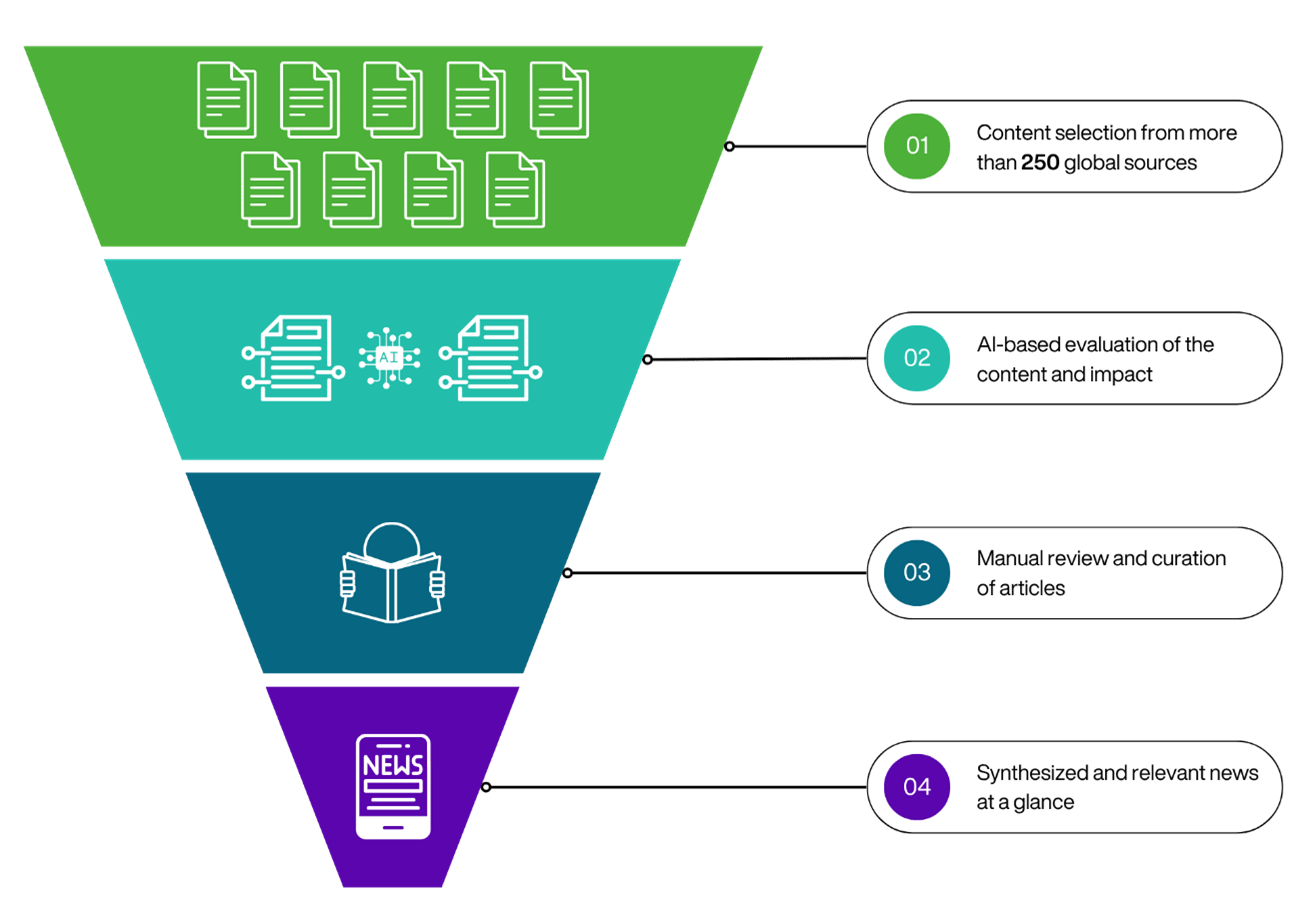
The Global Digi-Health Monitor is our weekly published newsletter featuring curated updates on the latest developments in digital health. With a focus on innovation and relevance, it brings together key news across topics such as AI in healthcare, wearables, telemedicine, cybersecurity, and more.
Our process is designed to be both scalable and selective. A broad network of over 250 global sources is continuously screened using six different AI tools. These tools help surface relevant content, which is then passed through a multi-step filtering and evaluation process that emphasizes innovation and impact.
In the final stage, selected articles are reviewed and curated by our team before being published. The result is a dynamic, well-structured view of what truly matters in the digital health ecosystem. This way you always stay ahead of the curve.