DIGI-HEALTH MONITOR Calendar Week 33, 2025
DIGI-HEALTH MONITOR: Calendar Week 33, 2025
Suicide-specific mobile app offers lifesaving support after psychiatric discharge
A groundbreaking study, published on August 8, 2025, in JAMA Network Open, reveals that the OTX-202 mobile app significantly reduces the recurrence of post-discharge suicide attempts among high-risk psychiatric inpatients. Developed by Oui Therapeutics, this app delivers a form of suicide-specific cognitive behavioral therapy and was found to decrease subsequent suicide attempts by an impressive 58.3% compared to controls. Users of the app also experienced sustained reductions in suicidal ideation for up to 24 weeks – a critical period when risk of self-harm is highest – whereas those in the control group (who used a general wellness app) saw their suicidal thoughts return to baseline levels. Researchers emphasize the app’s importance in addressing a major public health concern: the vulnerable transition period immediately following hospital discharge, when access to therapists trained in suicide prevention can be limited. The OTX-202 app provides personalized, evidence-based support through interactive therapy modules and safety planning tools, serving as a scalable and cost-effective extension of care. Its efficacy was validated through a multi-site, double-blind randomized controlled trial involving 337 patients across six U.S. hospitals. Supported by the National Institute of Mental Health (NIMH), this rigorous trial sets a new precedent for digital therapeutics, demonstrating that a well-designed app can deliver clinically significant outcomes for a highly at-risk population.
Ambulance Software Developed in Rwanda Enables Faster Care
Rwanda’s new telehealth platform, “Umutima,” connects ambulances with hospitals through low-bandwidth-optimized tablets that transmit real-time patient vitals (e.g., ECG, oxygen saturation, blood pressure, and even injury photos) to emergency department teams. During patient transport, hospital clinicians can triage cases and prepare necessary resources, a process that has slashed door-to-treatment time by an average of 17 minutes for stroke patients in pilot studies. The system intelligently compresses data for rural areas with spotty networks, using adaptive algorithms that maintain functionality at 2G cellular speeds. According to the Rwanda Biomedical Center, early implementation has led to a 33% improvement in survival rates for acute myocardial infarction cases. This low-cost innovation demonstrates how connectivity challenges can be overcome to dramatically improve emergency care in low-resource settings. The platform’s success has drawn interest from global health organizations, with partners like the Gates Foundation exploring adaptations for other low- and middle-income countries. By linking ambulance crews and hospitals in real time, Rwanda’s approach optimizes limited medical resources and serves as a model for improving critical care delivery where infrastructure is limited.
Wearable technology transforms laboratory medicine
Wearable devices are revolutionizing laboratory medicine by enabling remote, real-time patient monitoring through microfluidic platforms and AI-driven sensors, as showcased in expert sessions at Medica/Compamed 2025. Non-invasive tools like flash glucose monitors for diabetes and smart inhalers for asthma and COPD now deliver continuous vital data, optimizing treatments and aiding swift clinical decisions by healthcare providers. Future innovations — including predictive analytics, smart textiles, implanted sensors, and advanced microfluidic biosensors — promise even greater integration of lab diagnostics into daily wearables. The article notes that these advancements shift healthcare toward proactive, continuous, and personalized monitoring, though challenges such as data quality, privacy, and the need for clear regulatory standards persist. Enhanced automation in sample processing and digital data flow is also improving efficiency and patient safety in labs. Experts call for interdisciplinary collaboration and new talent to sustain this momentum, underscoring that wearables in diagnostics could help alleviate workforce shortages and transform chronic disease management. In sum, wearables are bringing certain laboratory tests out of central labs and closer to the patient’s daily life.
Future-Proofing Healthcare Starts with Smarter Data Management
Effective data management underpins healthcare’s evolution, tackling the sprawl of unstructured data — from medical images and scanned documents to emails and device feeds — that currently creates compliance risks and an estimated $105 billion in annual fraud losses. Modernization begins with gaining visibility into data assets across on-premise and cloud environments, then classifying and tagging information to guide what should be archived, secured, or deleted. By implementing policy-driven archiving and vendor-neutral storage platforms, organizations can reduce costs while ensuring important data remains accessible for analytics and AI applications. This proactive strategy mitigates risks and breaks down silos, enhancing fraud detection, regulatory compliance, and clinical decision-making. For patients, providers, and payers, smarter data governance translates into improved experiences and outcomes – such as faster retrieval of health records or more accurate predictive analytics. The article offers a pragmatic roadmap for healthcare systems to unlock big data’s potential while safeguarding privacy and operational continuity, effectively future-proofing health organizations through better data management.
What Sleep Sensing Can Tell Physicians About Mental Health
Wearable sleep-sensing devices (e.g., smart rings, wristbands, and EEG headbands) are now offering clinicians quantitative insights into patients’ mental health by tracking metrics like REM latency, sleep fragmentation, and heart-rate variability (HRV) patterns during rest. For instance, a Johns Hopkins study found that patients with severely disrupted REM cycles had a 68% likelihood of depression relapse, while unusual nocturnal HRV fluctuations have been linked to impending anxiety episodes. Platforms such as Bitsensing’s “NeuroRest” translate raw sleep data into clinician-friendly dashboards, flagging anomalies that might warrant intervention. At Mayo Clinic, therapists have begun integrating these sleep trend reports into treatment plans, even configuring companion apps to prompt personalized mindfulness exercises or other coping strategies when a patient’s biometrics indicate rising stress. Experts caution that consumer-grade sleep trackers are not a substitute for medical evaluation, but they acknowledge these tools as valuable supplements to traditional psychiatric assessments. By providing an early warning system for changes in a patient’s mental state, sleep-sensing wearables could help clinicians personalize care and intervene before a crisis unfolds.
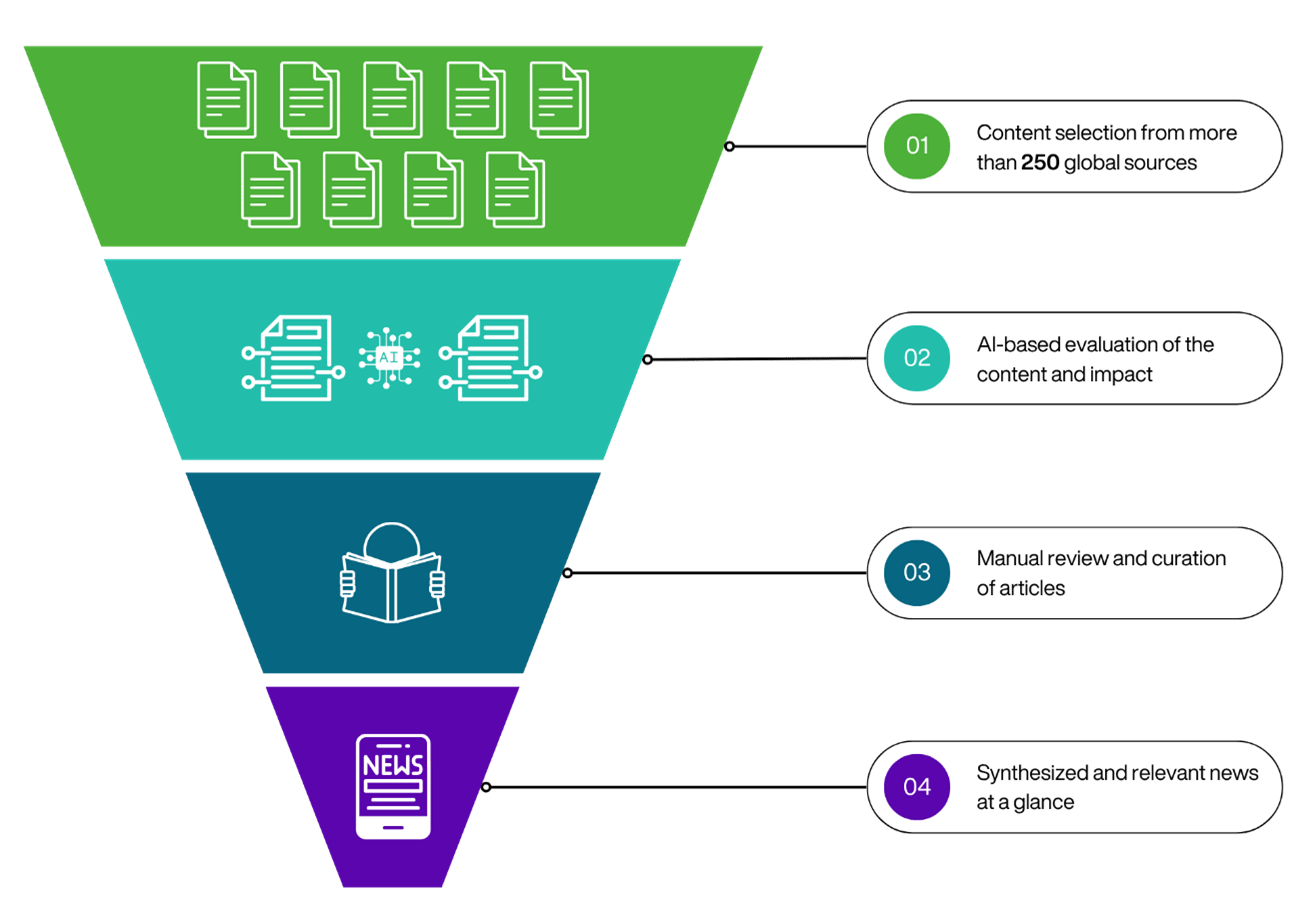
The Global Digi-Health Monitor is our weekly published newsletter featuring curated updates on the latest developments in digital health. With a focus on innovation and relevance, it brings together key news across topics such as AI in healthcare, wearables, telemedicine, cybersecurity, and more.
Our process is designed to be both scalable and selective. A broad network of over 250 global sources is continuously screened using six different AI tools. These tools help surface relevant content, which is then passed through a multi-step filtering and evaluation process that emphasizes innovation and impact.
In the final stage, selected articles are reviewed and curated by our team before being published. The result is a dynamic, well-structured view of what truly matters in the digital health ecosystem. This way you always stay ahead of the curve.