DIGI-HEALTH MONITOR Calendar Week 31, 2025
DIGI-HEALTH MONITOR: Calendar Week 31, 2025
Smart Patch Offers Breakthrough in Bipolar Disorder Monitoring
A wearable patch measures lithium levels in sweat for bipolar disorder patients, enabling non-invasive monitoring and real-time dose adjustments. Integrated with smartphone apps, it reduces reliance on blood draws and improves adherence. Early clinical tests show high correlation with traditional blood tests, suggesting reliability. Expandable to other chronic medications, it promises to revolutionize psychiatric care and chronic disease management. By empowering patients with real-time data, it enhances treatment precision and engagement. While innovative, its focus on a single condition and early-stage testing limit its current market impact compared to broader platforms. Its potential to expand to other medications and its patient-centric design make it a significant advancement in wearable health technology, though it lacks the systemic scope of higher-ranked articles.
Groundbreaking AI Tool Could Save Lives from Sudden Cardiac Arrest
Johns Hopkins University and Sanger Heart & Vascular Institute’s MAARS AI tool predicts sudden cardiac death in hypertrophic cardiomyopathy patients with 93% accuracy (ages 40–60) and 89% overall. Outperforming current methods (50% success rate), MAARS uses EHRs, doctor notes, and MRI scans for precise risk assessments, reducing unnecessary defibrillator implants. Tested across diverse demographics, it ensures equitable predictions and provides transparent explanations, fostering trust in AI-driven decisions. Published in Nature Cardiovascular Research, MAARS’s expansion to conditions like cardiac sarcoidosis highlights its versatility. By enhancing diagnostic precision and reducing costs, it sets a new standard in cardiology, with potential to transform patient outcomes and system efficiency. Its robust validation and clear clinical impact make it a strong contender, though its scope is narrower than global initiatives.
Gurgaon’s First Health ATM Offers 20+ Tests & Live Doctor Consultations
Gurgaon’s Health ATM at Sector 10 Civil Hospital provides over 20 medical tests, live video consultations, and e-prescriptions within 45 minutes, free of charge. Supporting Aadhaar and mobile logins, it offers multi-language access and delivers results via WhatsApp or email. Tests include blood pressure, ECG, blood sugar, and more, with mental health screenings included. Serving 6–7 patients daily, it reduces barriers to care, particularly for underserved populations. ASHA workers assist with usability, boosting weekly check-ups. While innovative, its regional focus and limited scale (a few machines) reduce its systemic impact compared to global initiatives. This model demonstrates telemedicine’s potential to enhance access in low-resource settings, offering a blueprint for scalable primary care solutions.
Neu Health Receives FDA Nod for Smartphone-Based Parkinson’s Tremor Tracker
Neu Health’s FDA-cleared smartphone-based tremor measurement module quantifies Parkinson’s disease tremors using standard smartphone sensors, eliminating the need for specialized wearables. Deployed at Mass General Brigham, it tracks motor and cognitive symptoms through seven-minute assessments, leveraging AI to predict clinical outcomes up to 18 months in advance. By capturing speech, dexterity, and balance data, it bridges gaps between clinic visits, enabling personalized care adjustments. Rooted in the Oxford Discovery Cohort, this evidence-based platform supports remote monitoring and clinician-guided care, setting a new standard for neurological disease management. While innovative, its focus on Parkinson’s limits its scope compared to broader platforms. Its accessibility and potential for expansion to other conditions enhance its market relevance.
Trump Administration Launches New Private Health Tracking System with Big Tech Collaboration
The Trump administration’s initiative, led by CMS, enables seamless health data sharing among patients, tech giants (Google, Amazon, Apple), and health systems to enhance wellness monitoring for conditions like diabetes. Patients opt-in to share data, enabling AI-driven insights for personalized care. For example, weight loss services leverage medical records, and apps access competitors’ data for comprehensive health views. Critics highlight privacy risks, data monetization concerns, and weak regulation of health apps, citing past government data misuse. While promising improved outcomes and access, the initiative faces trust barriers that could hinder adoption. Its scale and public-private collaboration signal significant market impact, but ethical concerns temper its ranking. This bold move could reshape digital health if privacy frameworks are strengthened.
The Global Digi-Health Monitor is our weekly published newsletter featuring curated updates on the latest developments in digital health. With a focus on innovation and relevance, it brings together key news across topics such as AI in healthcare, wearables, telemedicine, cybersecurity, and more.
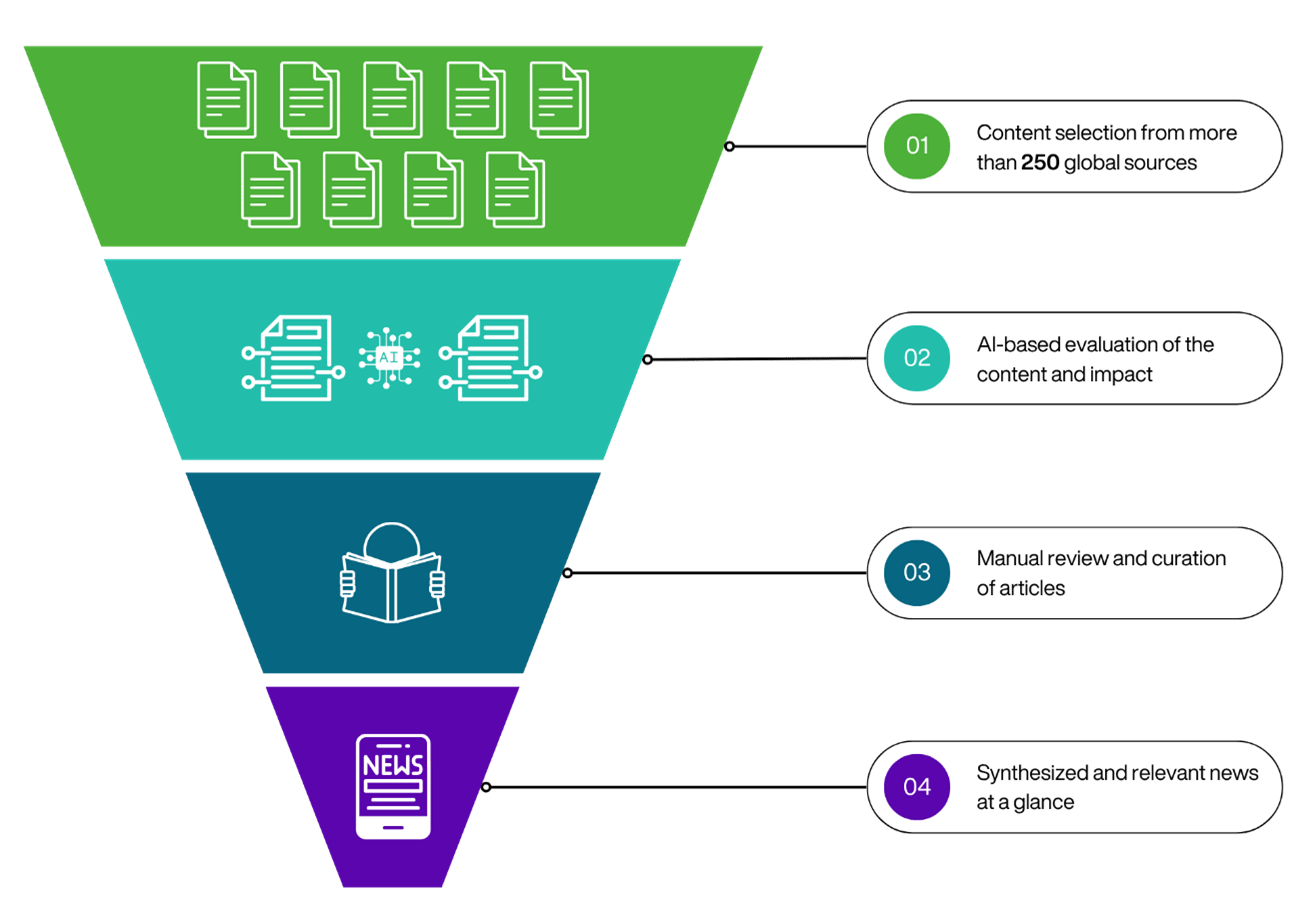
Our process is designed to be both scalable and selective. A broad network of over 250 global sources is continuously screened using six different AI tools. These tools help surface relevant content, which is then passed through a multi-step filtering and evaluation process that emphasizes innovation and impact.
In the final stage, selected articles are reviewed and curated by our team before being published. The result is a dynamic, well-structured view of what truly matters in the digital health ecosystem. This way you always stay ahead of the curve.