DIGI-HEALTH MONITOR Calendar Week 27, 2025
DIGI-HEALTH MONITOR: Calendar Week 27, 2025
AI-Powered Tool Reduces In-Patient Mortality by Analyzing Nurses’ Notes
Researchers developed an AI tool that analyzes nurses’ shift notes to detect subtle patterns signaling patient deterioration, reducing in-patient mortality by over a third. By processing unstructured data, it identifies health risks missed by traditional methods, enabling timely interventions that save lives. Tested in multiple hospitals, it integrates seamlessly with electronic health record systems, enhancing workflows without disruption. The tool supports predictive analytics for resource allocation, optimizing staffing and equipment use. Early results show consistent outcome improvements for high-risk patients, setting a new benchmark for proactive care. Its potential extends to other clinical analytics areas, promising transformative impacts on patient safety and operational efficiency. This advancement underscores AI’s role in revolutionizing healthcare delivery, offering scalable benefits for global systems. With its proven effectiveness, it’s poised to redefine standards in hospital care.
Duke Researchers Examine AI Safety in a Health Care Setting
Duke University’s latest research initiative tackles AI safety in clinical environments. A multi-pronged framework combines human oversight, automated metrics, and simulated edge-case scenarios to monitor AI systems in hospitals. Findings show AI reduces physician workload—cutting note-taking time by 20% and after-hours work by 30%—with nearly two-thirds of clinicians using AI tools daily. However, risks of AI-generated documentation errors highlight potential cascading effects on patient care. The piece explores broader implications for health systems, stressing ongoing evaluation and adaptive safeguards as AI embeds in clinical workflows. Balancing benefits and risks, it offers an in-depth look at how innovation and safety must advance together for AI to transform healthcare effectively.
Small hospitals and clinics emerge as big targets for cyberattacks
Cybercriminals increasingly target small healthcare providers—rural hospitals, independent clinics, and community health centers—exploiting their limited cybersecurity infrastructure. In 2024, 259 million patient records were compromised in 592 breaches, underscoring the scale of the threat. Under-resourced and isolated, these providers face a tough choice between cybersecurity and clinical investments. Expert interviews and policy recommendations to the White House highlight systemic vulnerabilities, calling for urgent interventions. While less focused on innovation, this piece powerfully addresses a critical, overlooked sector of healthcare cybersecurity with broad system relevance.
For hospitals, IT staffing remains a difficult challenge
Hospital IT staffing shortages hinder cybersecurity and digital transformation, especially outside metro areas. Noncompetitive salaries and remote work trends drive talent to private sectors, with 74% of CIOs citing hiring challenges per a HIMSS survey. Unfilled roles heighten risks from ransomware and attacks, exposing systemic vulnerabilities. While critical, this piece focuses on challenges rather than solutions, offering limited innovation but clear relevance to health data security across systems.
US Health Secretary Kennedy says HHS to launch campaign to encourage wearable devices
U.S. Health Secretary Robert F. Kennedy Jr. announced a federal campaign to get every American using wearable health devices within four years, part of his “Making America Healthy Again” plan. Promoting real-time feedback from devices like heart-rate and glucose monitors, the initiative aims to manage health proactively and cut medication costs. Commentary covers cost savings, market boosts for device makers, and reimbursement challenges. Light on technical detail, this policy shift signals regulatory momentum for consumer health tech with potential widespread impact.
The Global Digi-Health Monitor is our weekly published newsletter featuring curated updates on the latest developments in digital health. With a focus on innovation and relevance, it brings together key news across topics such as AI in healthcare, wearables, telemedicine, cybersecurity, and more.
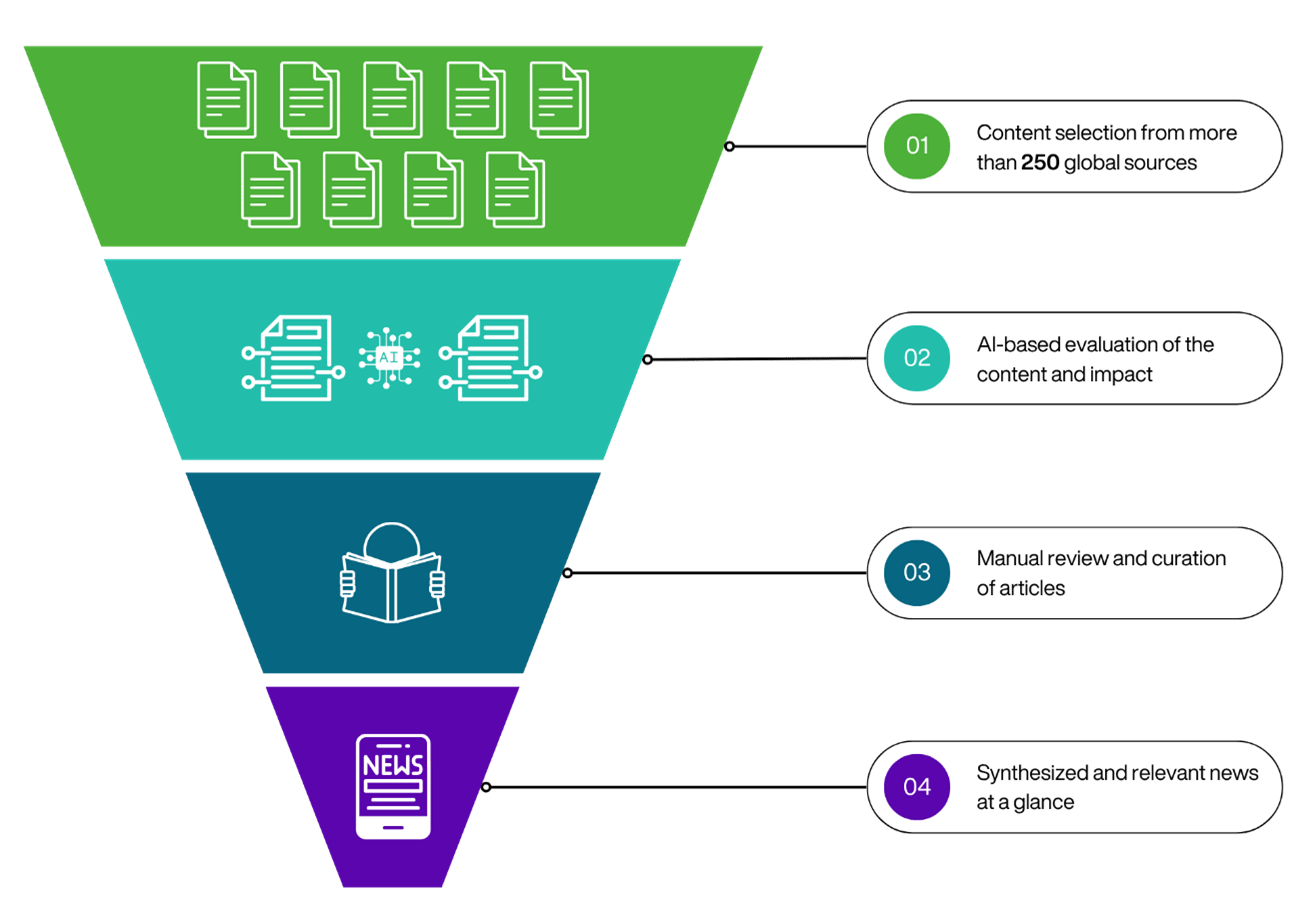
Our process is designed to be both scalable and selective. A broad network of over 250 global sources is continuously screened using five different AI tools. These tools help surface relevant content, which is then passed through a multi-step filtering and evaluation process that emphasizes innovation and impact.
In the final stage, selected articles are reviewed and curated by our team before being published. The result is a dynamic, well-structured view of what truly matters in the digital health ecosystem. This way you always stay ahead of the curve.