DIGI-HEALTH MONITOR Calendar Week 26, 2025
DIGI-HEALTH MONITOR: Calendar Week 26, 2025
Aidoc Launches Community-Aligned Framework for Clinical AI
Aidoc, in collaboration with NVIDIA, has introduced a pioneering framework aimed at standardizing the implementation of AI in healthcare. This initiative ensures that AI tools meet stringent technical, regulatory, and operational standards, promoting their safe and responsible use across medical settings. By tackling challenges such as algorithmic bias and regulatory compliance, this framework accelerates AI adoption while maintaining high safety and efficacy levels. Representing a significant strategic development, it promises to transform healthcare delivery globally by providing a structured approach to AI integration. Its focus on community alignment and standardization makes it an essential tool for healthcare organizations navigating the complexities of AI deployment, potentially reshaping clinical practices and enhancing patient outcomes on a broad scale.
AI Sniffs Earwax and Detects Parkinson’s With 94% Accuracy
Researchers have unveiled an AI system that detects Parkinson’s disease with 94% accuracy by analyzing earwax samples, marking a breakthrough in non-invasive diagnostics. Offering a faster and more accessible alternative to conventional methods, this approach could transform early detection and treatment of Parkinson’s. The AI’s capability to pinpoint subtle biomarkers in earwax opens new avenues for diagnosing neurodegenerative diseases, promising earlier interventions and better patient outcomes. This innovative method showcases AI’s potential to uncover previously unexplored diagnostic pathways, potentially revolutionizing how such conditions are identified and managed in clinical settings.
How Wearables Are Changing the Way We Monitor Cancer Treatment
Wearables and remote patient monitoring (RPM) are revolutionizing cancer care by enabling continuous, real-time tracking of vital signs such as heart rate and temperature. For patients undergoing chemotherapy or CAR T-cell therapy, this technology allows for the early detection of life-threatening complications like neutropenic fever, which can lead to costly hospitalizations. By transmitting data directly to healthcare providers, RPM enables timely interventions that improve outcomes and reduce costs. This marks a significant advance in patient safety and comfort, with broad implications for the future of digital health.
Harnessing Wearable Data Insights Without Inducing Information Overload and Patient Anxiety
Wearable tech, spanning smartwatches to nano-thin fabrics, is poised to hit a €120 billion market by 2028, churning out vast health data for personalized medicine. Yet, challenges like data overload, unvalidated readings, and equitable access persist. Experts at HLTH Europe 2025 flagged privacy concerns and the need for solutions to prevent misuse, underscoring wearables’ dual-edged impact on healthcare.
Medical Device Cyberattacks Push Hospitals into Crisis Mode
Escalating cyberattacks targeting medical devices are putting hospitals under severe pressure, jeopardizing patient safety and operational stability. Exploiting vulnerabilities in connected technologies, these attacks disrupt care delivery, prompting healthcare organizations to prioritize cybersecurity measures. This coverage emphasizes the critical need to protect patient data and ensure equipment reliability, highlighting cybersecurity’s integration into modern healthcare operations.
The Global Digi-Health Monitor is our weekly published newsletter featuring curated updates on the latest developments in digital health. With a focus on innovation and relevance, it brings together key news across topics such as AI in healthcare, wearables, telemedicine, cybersecurity, and more.
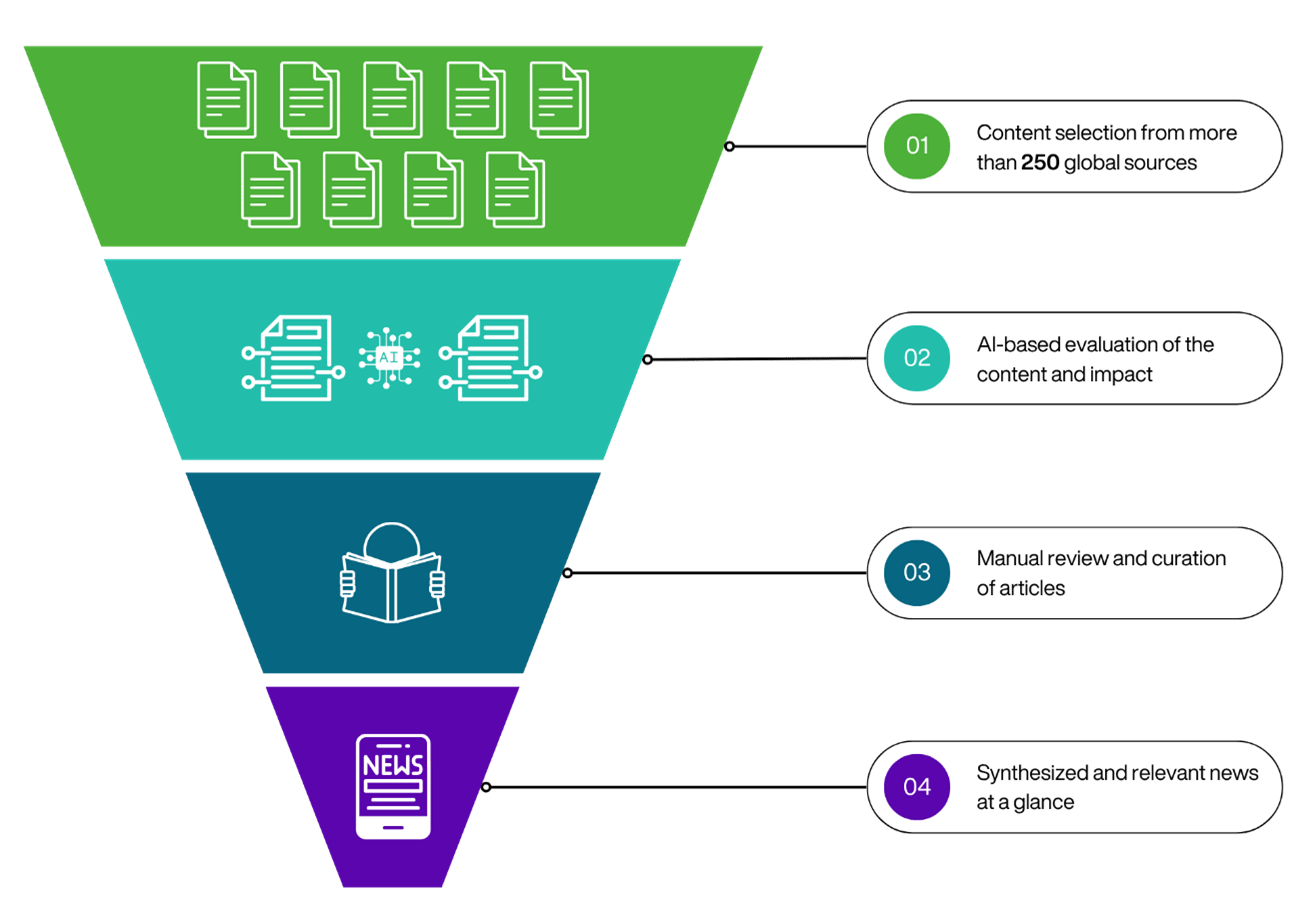
Our process is designed to be both scalable and selective. A broad network of over 250 global sources is continuously screened using five different AI tools. These tools help surface relevant content, which is then passed through a multi-step filtering and evaluation process that emphasizes innovation and impact.
In the final stage, selected articles are reviewed and curated by our team before being published. The result is a dynamic, well-structured view of what truly matters in the digital health ecosystem. This way you always stay ahead of the curve.