

Regulation and Evaluation of Medical Apps: Alternatives Needed?
Medical appsHealth apps describe mobile applications used in a health context. The term is broadly defined. Health apps are generally understood to include apps that support users in maintaining their health through automated, mobile data collection. They are found primarily in the areas of prevention and health promotion. Medical apps, which exist as a furthe… are mainly regulated as medical devices. However, these applications evolve quickly, raising the question of whether current approaches for regulation and evaluation are sufficient or if new incentives are needed.
What are Medical Apps?
Medical appsHealth apps describe mobile applications used in a health context. The term is broadly defined. Health apps are generally understood to include apps that support users in maintaining their health through automated, mobile data collection. They are found primarily in the areas of prevention and health promotion. Medical apps, which exist as a furthe… are a subgroup of health appsHealth apps describe mobile applications used in a health context. The term is broadly defined. Health apps are generally understood to include apps that support users in maintaining their health through automated, mobile data collection. They are found primarily in the areas of prevention and health promotion. Medical apps, which exist as a furthe… [1]. They are intended for either medical professionals or caregiving relatives and serve medical purposes, such as exchanging medical data. These apps provide improved access to medical resources and offer deeper insights into treatment [2]. However, there are discussions, about whether current methods for evaluating and regulating these apps are adequate [3, 4].
Focus Group Discussions at the 17th World Congress on Public Health
In their study, Maaß et al. aimed to identify potential future methods for evaluating the medical benefits and regulating medical apps.Health apps describe mobile applications used in a health context. The term is broadly defined. Health apps are generally understood to include apps that support users in maintaining their health through automated, mobile data collection. They are found primarily in the areas of prevention and health promotion. Medical apps, which exist as a furthe… In the context of their study, they conducted focus group discussions with 46 participants from 14 countries at the 17th World Congress on Public Health on the topic [4].
Regulation of Medical AppsHealth apps describe mobile applications used in a health context. The term is broadly defined. Health apps are generally understood to include apps that support users in maintaining their health through automated, mobile data collection. They are found primarily in the areas of prevention and health promotion. Medical apps, which exist as a furthe… in selected Countries
Medical appsHealth apps describe mobile applications used in a health context. The term is broadly defined. Health apps are generally understood to include apps that support users in maintaining their health through automated, mobile data collection. They are found primarily in the areas of prevention and health promotion. Medical apps, which exist as a furthe… are regulated differently across regions. To illustrate differences and similarities, Maaß et al. outlined regulations for medical appsHealth apps describe mobile applications used in a health context. The term is broadly defined. Health apps are generally understood to include apps that support users in maintaining their health through automated, mobile data collection. They are found primarily in the areas of prevention and health promotion. Medical apps, which exist as a furthe… of the four countries most prominently represented in the discussions (Germany, Italy, Australia, and Canada) in their study [4].
Medical appsHealth apps describe mobile applications used in a health context. The term is broadly defined. Health apps are generally understood to include apps that support users in maintaining their health through automated, mobile data collection. They are found primarily in the areas of prevention and health promotion. Medical apps, which exist as a furthe… are legally regulated as medical devices [5]. This imposes certain requirements, such as risk management and the need for evidence regarding medical benefits. To date, across the presented regions, evidence of medical benefits is mainly provided by conducting randomized clinical trials (RCTs), even though they are not legally required. Only in Germany medical appsHealth apps describe mobile applications used in a health context. The term is broadly defined. Health apps are generally understood to include apps that support users in maintaining their health through automated, mobile data collection. They are found primarily in the areas of prevention and health promotion. Medical apps, which exist as a furthe… are reimbursed. [4].
Challenges related to RCTs in the Evaluation of Medical AppsHealth apps describe mobile applications used in a health context. The term is broadly defined. Health apps are generally understood to include apps that support users in maintaining their health through automated, mobile data collection. They are found primarily in the areas of prevention and health promotion. Medical apps, which exist as a furthe…
RCTs are considered as the gold-standard in clinical evaluation and follow a structured approach. One key aspect is randomization, which balances patient characteristics among the study groups. The study population is determined before the study begins and depends on the aspects that are observed. Due to their nature, RCTs are expensive and time-consuming, face the risk of attrition, and sometimes their results cannot be generalized [6]. However, medical appsHealth apps describe mobile applications used in a health context. The term is broadly defined. Health apps are generally understood to include apps that support users in maintaining their health through automated, mobile data collection. They are found primarily in the areas of prevention and health promotion. Medical apps, which exist as a furthe… are frequently updated and tailored to users’ needs, resulting in a continuous need to provide evidence of their medical benefits. This contrasts with the concept of RCTs, as the speed of medical app development often does not align with the duration of the RCT [4].
Adaptable Evaluation and Regulation are needed to promote Innovation
During the focus group discussion conducted by Maaß et al., the participants acknowledged the value of traditional RCTs in reducing bias and establishing causal relationships, but emphasized the need for more flexible evaluation approaches. They highlighted the need for data regarding user engagement and in-app evaluations [4].
Concerning regulatory requirements, they discussed the importance of adaptable standards that align with the potential risk of the apps. The standards have to address data privacy, informed consent, and bias prevention. Over-regulation, they noted, could hinder innovation and lead to fragmented, narrowly focused “siloed” apps that reduce usability [4].
Logic Model for the Evaluation and Regulation of Medical AppsHealth apps describe mobile applications used in a health context. The term is broadly defined. Health apps are generally understood to include apps that support users in maintaining their health through automated, mobile data collection. They are found primarily in the areas of prevention and health promotion. Medical apps, which exist as a furthe…
Following the focus group discussions, Maaß et al. developed a logic model for the evaluation and regulation of medical appsHealth apps describe mobile applications used in a health context. The term is broadly defined. Health apps are generally understood to include apps that support users in maintaining their health through automated, mobile data collection. They are found primarily in the areas of prevention and health promotion. Medical apps, which exist as a furthe… during their lifecycle (Figure 2) [4].
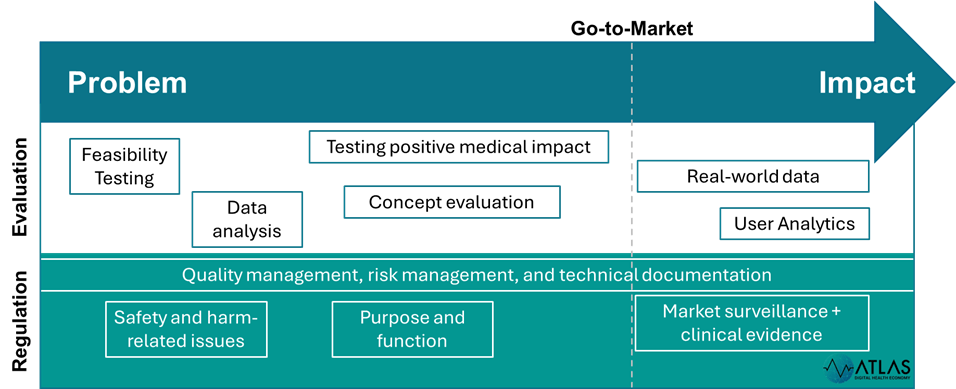
Figure 1: Schematic representation of the developed logic model on medical app (Maaß et al. 2024)
During app development, regulation should incorporate both safety- and harm-related issues, as well as the purpose and function of the apps. For evaluation, Maaß et al. propose feasibility studies that evaluate the target and content. They also state that there has to be evidence of a positive medical impact prior to market launch. This can be achieved either through traditional RCTs or other approaches, such as preference-based controlled trials [4]. Such trials aim to reduce challenges in recruitment and attrition associated with traditional RCTs by enrolling patients in treatment groups they prefer and, therefore, optimizing their treatment acceptance [7].
After the market launch, Maaß et al. state that regulation should require both the reporting of adverse events (market surveillance)In epidemiology, surveillance refers to the monitoring of diseases. In particular, infectious diseases are continuously and systematically recorded by collecting, analysing, and interpreting relevant data. As a result, medical measures to contain a disease can be initiated, for example. and the collection of clinical evidence. For evaluation, they suggest analyzing real-world data, such as hospital data. Another option is pragmatic randomized controlled trials (PRCTs) [4].
PRCTs are conducted in a real-world setting with a focus on effectiveness and adverse events. They featureA dataset can be understood as a collection of data objects, also referred to as points, vectors, observations, or entities. Each data object is described by a set of characteristics known as features. A feature is therefore a single measurable property or characteristic of an observed phenomenon. In machine learning and data science, features serv… a diverse patient group [8]. Other approaches could focus on user analytics through qualitative interviews or built-in analytics functions (e.g., Google Analytics).
Quality management, risk management, and technical documentation of the app have to be continuously updated [4].
Future Regulations of AI-enabled Medical AppsHealth apps describe mobile applications used in a health context. The term is broadly defined. Health apps are generally understood to include apps that support users in maintaining their health through automated, mobile data collection. They are found primarily in the areas of prevention and health promotion. Medical apps, which exist as a furthe…
Maintaining medical appsHealth apps describe mobile applications used in a health context. The term is broadly defined. Health apps are generally understood to include apps that support users in maintaining their health through automated, mobile data collection. They are found primarily in the areas of prevention and health promotion. Medical apps, which exist as a furthe… will be a challenge for manufacturers in the future. Due to their high potential, there is a strong trend toward integrating AIArtificial Intelligence (AI) implies the attempt to transfer human learning and thinking to computers. Computer systems are intended to solve problems—for which a human would require intelligence—using large datasets. In the field of radiology, for example, artificial intelligence can assist physicians in diagnosing findings and detecting abnormali… Explained in the video. features in medical technologies [9], which further increases the pace of change within medical apps.Health apps describe mobile applications used in a health context. The term is broadly defined. Health apps are generally understood to include apps that support users in maintaining their health through automated, mobile data collection. They are found primarily in the areas of prevention and health promotion. Medical apps, which exist as a furthe… The FDA has taken this into account by issuing a draft guidance intended to help manufacturers maintain and advance their AI-enabled medical devices throughout the Total Product Lifecycle (TPLC) [10]. The draft guidance outlines a continuous AIArtificial Intelligence (AI) implies the attempt to transfer human learning and thinking to computers. Computer systems are intended to solve problems—for which a human would require intelligence—using large datasets. In the field of radiology, for example, artificial intelligence can assist physicians in diagnosing findings and detecting abnormali… Explained in the video. lifecycle approach with recurring real-world performance assessments, as devices with AIArtificial Intelligence (AI) implies the attempt to transfer human learning and thinking to computers. Computer systems are intended to solve problems—for which a human would require intelligence—using large datasets. In the field of radiology, for example, artificial intelligence can assist physicians in diagnosing findings and detecting abnormali… Explained in the video. have the potential for continuous adjustments based on live data. Similar to Maaß et al., the FDA also discusses the need for alternatives to RCTs to demonstrate the pre-market safety and effectiveness of medical devices [10].
The presented innovative approaches are a welcome step in regulating and evaluating medical appsHealth apps describe mobile applications used in a health context. The term is broadly defined. Health apps are generally understood to include apps that support users in maintaining their health through automated, mobile data collection. They are found primarily in the areas of prevention and health promotion. Medical apps, which exist as a furthe… in the future. They take into account the dynamic nature of these apps while aiming to ensure safety and efficacy.
Also Read: AI-Based Symptom Checkers in Medical Self-Diagnosis
References
1. Gregor-Haack J. Erstattung von Health-Apps durch die gesetzliche Krankenversicherung. [Reimbursement of health appsHealth apps describe mobile applications used in a health context. The term is broadly defined. Health apps are generally understood to include apps that support users in maintaining their health through automated, mobile data collection. They are found primarily in the areas of prevention and health promotion. Medical apps, which exist as a furthe… by the German statutory health insurance]. Bundesgesundheitsblatt Gesundheitsforschung Gesundheitsschutz. 2018;61:328–33. doi:10.1007/s00103-018-2689-z.
2. Timmers T, Janssen L, Pronk Y, van der Zwaard BC, Koëter S, van Oostveen D, et al. Assessing the Efficacy of an Educational Smartphone or Tablet App With Subdivided and Interactive Content to Increase Patients’ Medical Knowledge: Randomized Controlled Trial. JMIR MhealthmHealth is defined as a sub-discipline of eHealth. It describes the provision of medical information and services via mobile devices that are capable of communicating with other devices on a technological basis. Existing definitions differentiate mHealth according to the technologies used (wearables, sensors, etc.) and the type of mobile data trans… Uhealth. 2018;6:e10742. doi:10.2196/10742.
3. Agarwal P, Gordon D, Griffith J, Kithulegoda N, Witteman HO, Sacha Bhatia R, et al. Assessing the quality of mobile applications in chronic disease management: a scoping review. NPJ Digit Med. 2021;4:46. doi:10.1038/s41746-021-00410-x.
4. Maaß L, Hrynyschyn R, Lange M, Löwe A, Burdenski K, Butten K, et al. Challenges and Alternatives to Evaluation Methods and Regulation Approaches for Medical AppsHealth apps describe mobile applications used in a health context. The term is broadly defined. Health apps are generally understood to include apps that support users in maintaining their health through automated, mobile data collection. They are found primarily in the areas of prevention and health promotion. Medical apps, which exist as a furthe… as Mobile Medical Devices: International and Multidisciplinary Focus Group Discussion. J Med Internet Res. 2024;26:e54814. doi:10.2196/54814.
5. Maaß L, Freye M, Pan C-C, Dassow H-H, Niess J, Jahnel T. The Definitions of Health AppsHealth apps describe mobile applications used in a health context. The term is broadly defined. Health apps are generally understood to include apps that support users in maintaining their health through automated, mobile data collection. They are found primarily in the areas of prevention and health promotion. Medical apps, which exist as a furthe… and Medical AppsHealth apps describe mobile applications used in a health context. The term is broadly defined. Health apps are generally understood to include apps that support users in maintaining their health through automated, mobile data collection. They are found primarily in the areas of prevention and health promotion. Medical apps, which exist as a furthe… From the Perspective of Public Health and Law: Qualitative Analysis of an Interdisciplinary Literature Overview. JMIR MhealthmHealth is defined as a sub-discipline of eHealth. It describes the provision of medical information and services via mobile devices that are capable of communicating with other devices on a technological basis. Existing definitions differentiate mHealth according to the technologies used (wearables, sensors, etc.) and the type of mobile data trans… Uhealth. 2022;10:e37980. doi:10.2196/37980.
6. Hariton E, Locascio JJ. Randomised controlled trials – the gold standard for effectiveness research. BJOG. 2018;125:1716. doi:10.1111/1471-0528.15199.
7. Alibhai SMH, Papadopoulos E, Durbano S, Tomlinson G, Mina DS, Ritvo P, et al. Preference-based versus randomized controlled trial in prostate cancer survivors: Comparison of recruitment, adherence, attrition, and clinical outcomes. Front Oncol. 2022;12:1033229. doi:10.3389/fonc.2022.1033229.
8. Omerovic E, Petrie M, Redfors B, Fremes S, Murphy G, Marquis-Gravel G, et al. Pragmatic randomized controlled trials: strengthening the concept through a robust international collaborative network: PRIME-9-Pragmatic Research and Innovation through Multinational Experimentation. Trials. 2024;25:80. doi:10.1186/s13063-024-07935-y.
9. Bitkina OV, Park J, Kim HK. Application of artificial intelligenceArtificial Intelligence (AI) implies the attempt to transfer human learning and thinking to computers. Computer systems are intended to solve problems—for which a human would require intelligence—using large datasets. In the field of radiology, for example, artificial intelligence can assist physicians in diagnosing findings and detecting abnormali… Explained in the video. in medical technologies: A systematic review of main trends. Digit Health. 2023;9:20552076231189331. doi:10.1177/20552076231189331.
10. Food and Drug Administration (FDA). Artificial Intelligence-Enabled Device Software Functions: Lifecycle Management and Marketing Submission Recommendations: Draft Guidance for Industry and Food and Drug Administration Staff 07.01.2025.

Contact
E-Mail:
atlas-itg@uni-wh.deInnovation in Healthcare
Alfred-Herrhausen-Straße 50
58448 Witten, Germany