
North Rhine-Westphalia's AI Hub
Artificial Intelligence in North Rhine-Westphalia
North Rhine-Westphalia is a leader in the research and development of artificial intelligence in healthcare. The KI.NRW platform, developed by Fraunhofer IAIS, bundles essential expertise and promotes the transfer of knowledge from research to industry. One highlight is the innovative online tool “AI Worlds“, which clearly visualises the diverse areas of application of AI along the entire care process, making it more accessible to healthcare providers.
NRW’s hospitals are home to pioneering lighthouse projects in which artificial intelligence is already transforming healthcare. The SmartHospital project is developing a readiness check to assess the AI maturity of hospitals and practical process models for the sustainable implementation of AI. In its showroom, the University Hospital Essen offers exciting insights into the hospital of the future and shows how AI can revolutionise healthcare.
Here, experts from North Rhine-Westphalia will share their medical, technical and economic insights into the opportunities, challenges and future prospects of artificial intelligence. Find out first-hand what innovative developments are being driven forward in the region and how they are revolutionising healthcare..
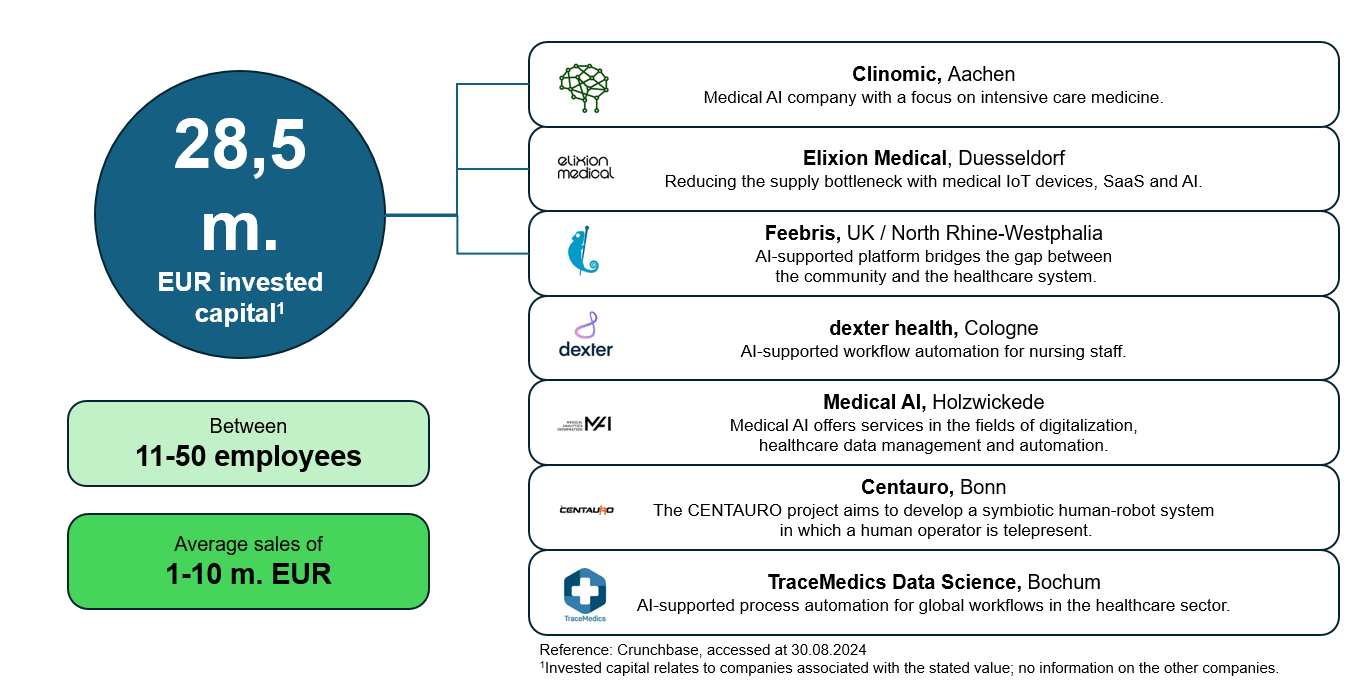
Companies from North Rhine-Westphalia that develop AI for healthcare
Articles & Interviews
Hotspot Analysis of Artificial intelligence (AI) in Cancer Screening
In recent years, AI technologies represented by Generative AI (GenAI) have sparked a new wave of technological and application innovation. GenAI currently stands as the most widely applied subfield within AI. By 2025, GenAI has evolved from simple text generation into comprehensive models capable of handling complex tasks. This evolution holds revolutionary potential for the healthcare sector. However, according to a July 2025 MIT report, 95% of GenAI pilot projects fail, with healthcare particularly stuck in a situation of “many pilots but low transformation success rates.
Hotspot Analysis of Artificial intelligence (AI) in Cancer Screening
Early cancer screening remains one of the most effective strategies to reduce cancer-related mortality. When combined with the power of artificial intelligence (AI), early detection efforts can achieve new levels of speed, precision, and accessibility. AI tools have the potential to assist clinicians in identifying subtle abnormalities, triaging risk levels, and enhancing diagnostic workflows—particularly in imaging-heavy fields such as breast and lung cancer screening. AI is no longer a futuristic promise in cancer screening—it is fast becoming a central topic in medical innovation, clinical workflows, and public discourse.
Improving public health sustainably with AI in prevention
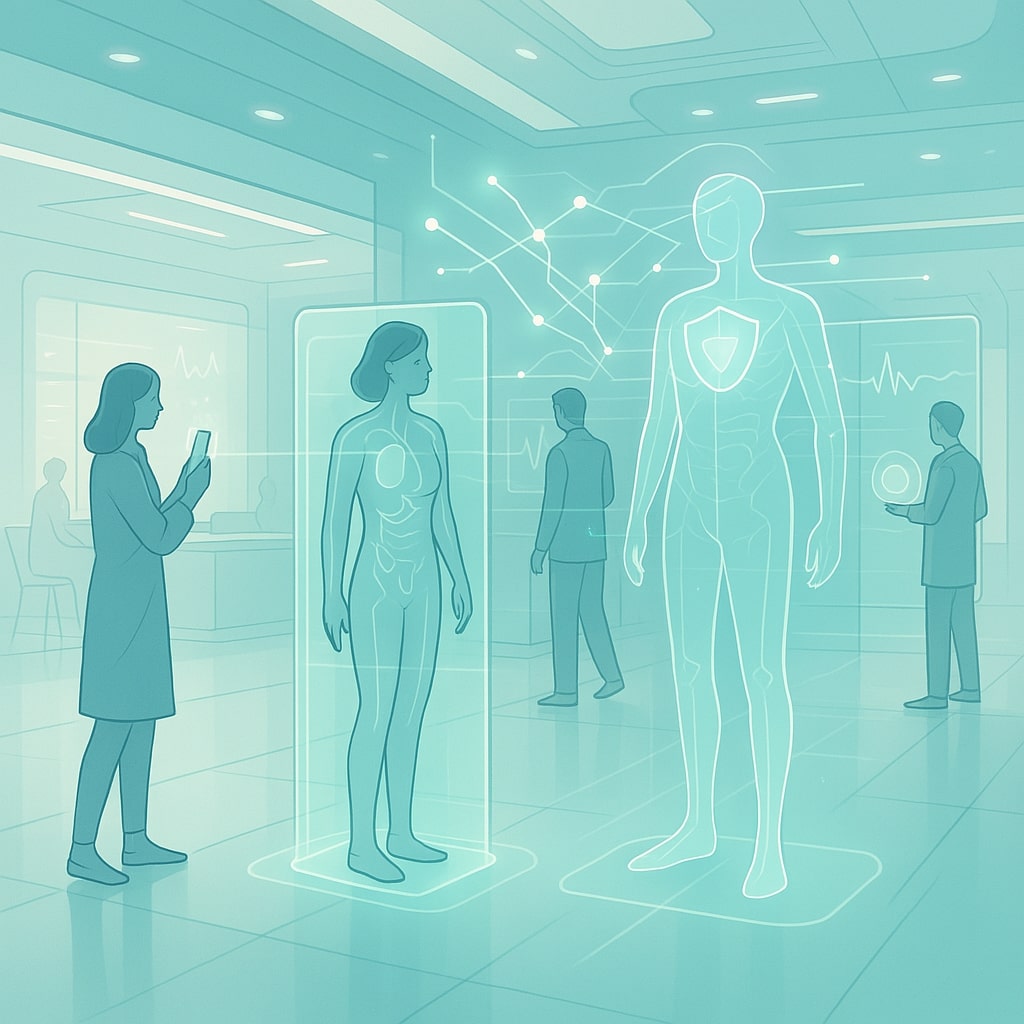
Artificial intelligence in prevention marks a fundamental paradigm shift in healthcare: From reactive treatment to proactive health promotion. Through the analysis of large amounts of data, real-time pattern recognition and personalised risk profiles, AI in prevention promises to make interventions not only more efficient but also more personalised. This creates new opportunities to detect disease earlier, address risk factors more effectively and influence health behaviour in the long term. But these technological advances also raise complex issues – such as data sovereignty, structural inequalities and the role of human decision-making in interaction with algorithmic systems. We spoke to three experts for the Artificial Intelligence Technology Hub to explore the opportunities and challenges of AI in prevention.
Read more…
Practical AI solutions for everyday hospital operations
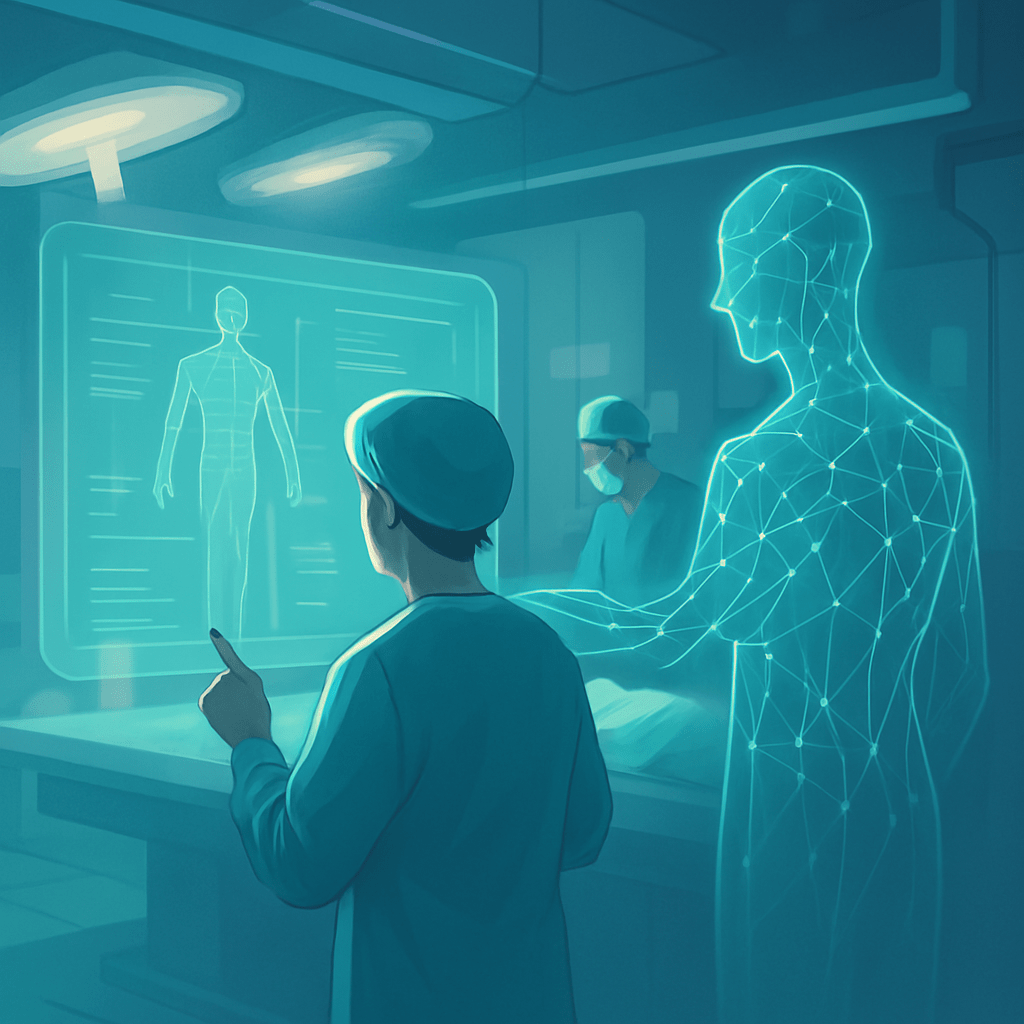
Artificial intelligence (AI) is increasingly revolutionizing hospital treatment, offering the potential to improve both the efficiency and quality of patient care. By using AI-supported technologies and algorithms, medical professionals can, among other things, make more precise diagnoses in a shorter amount of time, leading to faster treatment decisions. AI also enables personalized medicine by analyzing vast amounts of patient data and deriving individual therapy recommendations. In this context, we spoke with three AI experts who share their insights and perspectives on the future of AI.
Read more…
Contact
E-Mail:
atlas-itg@uni-wh.deInnovation in Healthcare
Alfred-Herrhausen-Straße 50
58448 Witten, Germany