

DIGI-HEALTH MONITOR Calendar Week 35
DIGI-HEALTH MONITOR:
Calendar Week 35, 2026
This week’s spotlight article
How consumer health AIArtificial Intelligence (AI) implies the attempt to transfer human learning and thinking to computers. Computer systems are intended to solve problems—for which a human would require intelligence—using large datasets. In the field of radiology, for example, artificial intelligence can assist physicians in diagnosing findings and detecting abnormali… Explained in the video. is becoming part of the care pathway
Anyone who googles a symptom or asks an AIArtificial Intelligence (AI) implies the attempt to transfer human learning and thinking to computers. Computer systems are intended to solve problems—for which a human would require intelligence—using large datasets. In the field of radiology, for example, artificial intelligence can assist physicians in diagnosing findings and detecting abnormali… Explained in the video. chatbot a health-related question is usually looking for initial guidance. At the same time, these systems are increasingly being integrated into actual healthcare processes.
A recent Perspective in Nature Health describes this development as a shift from health AIArtificial Intelligence (AI) implies the attempt to transfer human learning and thinking to computers. Computer systems are intended to solve problems—for which a human would require intelligence—using large datasets. In the field of radiology, for example, artificial intelligence can assist physicians in diagnosing findings and detecting abnormali… Explained in the video. as an information tool towards platforms that connect multiple stages of the care pathway. These include medical records, appointment booking, pharmacies, payment systems and clinical workflows (Wu et al., Nature Health, 2026).
The authors examine four examples: OpenAI’s ChatGPT Health, Amazon Health AI,Artificial Intelligence (AI) implies the attempt to transfer human learning and thinking to computers. Computer systems are intended to solve problems—for which a human would require intelligence—using large datasets. In the field of radiology, for example, artificial intelligence can assist physicians in diagnosing findings and detecting abnormali… Explained in the video. Ant Group’s Afu and Anthropic’s Claude for Healthcare. The systems differ in the extent of their integration, but point towards a common development in which information and care delivery are becoming more closely connected.
This makes what the authors call ‘integration depth’ increasingly relevant when evaluating these systems. It describes how far a platform extends across the pathway, from an initial health-related question, through access to personal data and onward referral, to clinical workflows.
Such integration could be particularly beneficial in regions where access to healthcare is limited. If individual steps such as booking an appointment, obtaining medication or making payments can be connected more seamlessly, more people may be able to complete a care pathway once they have entered it.
As these systems become more deeply integrated into healthcare, decisions about recommended care may become concentrated within individual platforms. This also raises new questions about control over health dataHealth data, also referred to as patient data, encompasses all information relating to the health status of a person. This includes demographic records as well as medical history, vaccination status, and advance directives. Health data constitutes a special category of personal data under GDPR Article 9, subject to strict additional regulations due… and care processes. Regulation would therefore need to consider how patients are directed through the system, which commercial interests may be involved and who ultimately controls the care pathway, alongside the safety and quality of individual models.
This perspective is particularly relevant for Germany and Europe. Healthcare here involves a large number of different stakeholders, responsibilities and funding structures. An AIArtificial Intelligence (AI) implies the attempt to transfer human learning and thinking to computers. Computer systems are intended to solve problems—for which a human would require intelligence—using large datasets. In the field of radiology, for example, artificial intelligence can assist physicians in diagnosing findings and detecting abnormali… Explained in the video. platform that connects information, appointment booking, treatment and payment would therefore support individual processes while also influencing how patients move through the healthcare system. Regulation and oversight would need to consider transparency, interoperability, data protection and potential conflicts of interest across the entire care pathway, alongside the quality of individual models.
Other articles from this week
Patient data was breached in AnMed attack
AnMed, a South Carolina health system, confirmed a breach of patient health information following a July 2026 ransomware attack by “The Gentlemen” gang, which disrupted care for weeks and compromised sensitive records, including Social Security numbers, reproductive health, and psychiatric histories. CEO William Kinley disclosed the breach via video, while independent firm Comparitech contextualized the gang’s tactics: exfiltrating data pre-encryption to maximize ransom leverage. AnMed’s IT team and external specialists were still determining the breach scope at reporting time, with patient notifications pending. The incident underscores evolving extortion tactics in healthcare, including secondary scams targeting patients. Governance lessons highlight AnMed’s phased communication during an unresolved crisis and the operational challenge of confirming breach scope before notifications. Outcomes are organization-confirmed (CEO statement) and independently contextualized (Comparitech). Next steps include forensic review, system restoration, and individual notifications. The article demonstrates real-world cybersecurityCybersecurity represents an extension of information security. It goes beyond the boundaries of traditional information security and encompasses, in addition to the protection of information resources, also the protection of other assets including the individual. In cybersecurity, the human factor gains an additional dimension: the person as a pote… Explained in the video. threats, system-level impact, and transparent governance challenges, making it a top-tier example of Route A’s practical relevance.
Siemens Healthineers, Philips awarded ARPA-H funds for stroke robots
Autonomous endovascular robotics capable of performing mechanical thrombectomy (clot removal for acute ischemic stroke) without direct human input represent an emerging category of physical AIArtificial Intelligence (AI) implies the attempt to transfer human learning and thinking to computers. Computer systems are intended to solve problems—for which a human would require intelligence—using large datasets. In the field of radiology, for example, artificial intelligence can assist physicians in diagnosing findings and detecting abnormali… Explained in the video. targeting a major stroke-care access gap. The U.S. ARPA-H awarded up to $175.3M over 5 years to a consortium including Siemens Healthineers ($31.1M + $5.4M match), Philips North America ($33.7M), MIT spinout Magnendo ($32M), UC San Diego, and Stryker. The clinical rationale is urgent: >50% of the U.S. population lives >1 hour from a thrombectomy-capable center, and only ~12% of eligible patients receive the procedure due to a shortage of interventionalists. The envisioned workflow allows patients to receive thrombectomy at their nearest hospital via remote/autonomous robotic operation, eliminating transfer delays. This is early-stage development funding—no robots have been tested in patients yet. Benefits remain anticipated, not demonstrated. The article provides credible adoption timelines, system-level implications, and expert perspectives (Siemens, ARPA-H), while acknowledging programmatic uncertainty (federal funding cuts). It excels in strategic outlook, clinical need, and realistic deployment barriers.
Thoughtfully incorporating AIArtificial Intelligence (AI) implies the attempt to transfer human learning and thinking to computers. Computer systems are intended to solve problems—for which a human would require intelligence—using large datasets. In the field of radiology, for example, artificial intelligence can assist physicians in diagnosing findings and detecting abnormali… Explained in the video. into UCLA Health
UCLA Health, led by Chief AIArtificial Intelligence (AI) implies the attempt to transfer human learning and thinking to computers. Computer systems are intended to solve problems—for which a human would require intelligence—using large datasets. In the field of radiology, for example, artificial intelligence can assist physicians in diagnosing findings and detecting abnormali… Explained in the video. Officer Paul J. Lukac, MD, and Associate Dean Katherine P. Andriole, PhD, embeds AIArtificial Intelligence (AI) implies the attempt to transfer human learning and thinking to computers. Computer systems are intended to solve problems—for which a human would require intelligence—using large datasets. In the field of radiology, for example, artificial intelligence can assist physicians in diagnosing findings and detecting abnormali… Explained in the video. in clinical care, research, and education with human-in-the-loop requirements. A website chatbot provides specialist details (with scheduling planned), while an ambient scribe used by ~1,000 physicians cuts documentation time, enabling more face-to-face patient interaction. Radiology triage prioritizes suspicious head CTs (e.g., stroke) for faster reads. ~40% of models are built internally; the rest come from Epic and external vendors. The UCLA Health AIArtificial Intelligence (AI) implies the attempt to transfer human learning and thinking to computers. Computer systems are intended to solve problems—for which a human would require intelligence—using large datasets. In the field of radiology, for example, artificial intelligence can assist physicians in diagnosing findings and detecting abnormali… Explained in the video. Council reviews every tool for ethics, equity, security, and privacy. Research includes conversational agents for geriatric oncology and a grant for autonomous heart-failure management via wearables.Wearables refer to technologies in the form of sensors or mobile applications that collect health data asynchronously and beyond the boundaries of medical care. They include wristbands, smartwatches, and other mobile sensors. These measure and collect data such as blood glucose levels, pulse, or sleep data, and transmit this information either auto… Education focuses on workforce upskilling. Outcomes emphasize efficiency and clinician experience, with challenges in equity and validation. Scaling continues under council oversight, ensuring responsible AIArtificial Intelligence (AI) implies the attempt to transfer human learning and thinking to computers. Computer systems are intended to solve problems—for which a human would require intelligence—using large datasets. In the field of radiology, for example, artificial intelligence can assist physicians in diagnosing findings and detecting abnormali… Explained in the video. integration with strong governance and multi-stakeholder involvement.
Ambient Scribes Improve Clinician Retention, Cleveland Clinic Study Finds
Cleveland Clinic deployed Ambience Healthcare’s ambient-scribing platform to over 4,000 ambulatory-care clinicians in four months. The system listens to clinical encounters, generates documentation, and produces coding/billing suggestions, reducing time spent on records. Adoption was optional, supported by live virtual training (3x daily) and on-demand sessions. Clinicians retained responsibility for reviewing/approving notes, with the tool positioned as an assistant, not a decision-maker. The deployment demonstrates large-scale adoption, strong organizational support, and workflow integration, though it lacks quantified clinical outcomes. Governance is implicit in clinician oversight, and scaling is evidenced by the rapid rollout. This article highlights practical AIArtificial Intelligence (AI) implies the attempt to transfer human learning and thinking to computers. Computer systems are intended to solve problems—for which a human would require intelligence—using large datasets. In the field of radiology, for example, artificial intelligence can assist physicians in diagnosing findings and detecting abnormali… Explained in the video. adoption in a major health system, with a focus on clinician experience and operational efficiency.
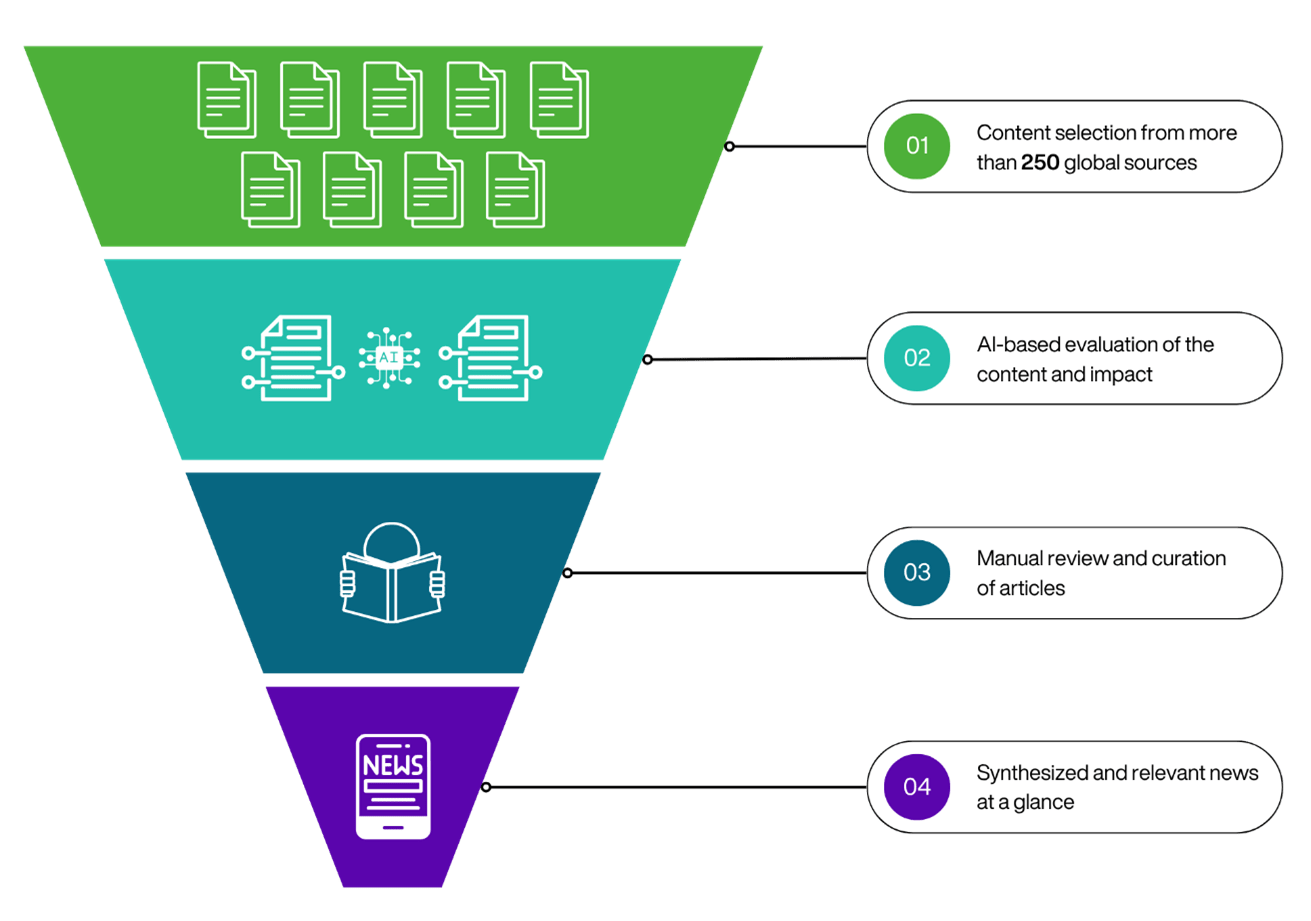
The Global Digi-Health Monitor is our weekly published newsletter featuring curated updates on the latest developments in digital health. With a focus on innovation and relevance, it brings together key news across topics such as AIArtificial Intelligence (AI) implies the attempt to transfer human learning and thinking to computers. Computer systems are intended to solve problems—for which a human would require intelligence—using large datasets. In the field of radiology, for example, artificial intelligence can assist physicians in diagnosing findings and detecting abnormali… Explained in the video. in healthcare, wearables,Wearables refer to technologies in the form of sensors or mobile applications that collect health data asynchronously and beyond the boundaries of medical care. They include wristbands, smartwatches, and other mobile sensors. These measure and collect data such as blood glucose levels, pulse, or sleep data, and transmit this information either auto… telemedicine,Telemedicine encompasses various healthcare delivery concepts characterized by direct patient care across geographical distances or time delays. This includes diagnostic, therapeutic, rehabilitative, and consultative services delivered through information and communication technologies. Particularly with regard to rural areas, telemedicine offers s… Explained in the video. cybersecurity, and more.
Our process is designed to be both scalable and selective. A broad network of over 250 global sources is continuously screened using six different AIArtificial Intelligence (AI) implies the attempt to transfer human learning and thinking to computers. Computer systems are intended to solve problems—for which a human would require intelligence—using large datasets. In the field of radiology, for example, artificial intelligence can assist physicians in diagnosing findings and detecting abnormali… Explained in the video. tools. These tools help surface relevant content, which is then passed through a multi-step filtering and evaluation process that emphasizes innovation and impact.
In the final stage, selected articles are reviewed and curated by our team before being published. The result is a dynamic, well-structured view of what truly matters in the digital health ecosystem. This way you always stay ahead of the curve.
Contact
E-Mail:
atlas-itg@uni-wh.deInnovation in Healthcare
Alfred-Herrhausen-Straße 50
58448 Witten, Germany