

DIGI-HEALTH MONITOR Calendar Week 16
DIGI-HEALTH MONITOR:
Calendar Week 16, 2026
Indonesia Scales National Digital Health Integration: The VDHIC and SATUSEHAT Platform
The Indonesian government has launched the Value-Based Digital Health Implementation Framework (VDHIC) to optimize the performance of its national SATUSEHAT platform, which as of April 2026 successfully connects 95% of the nation’s hospitals and 91% of primary care facilities. This implementation unifies health dataHealth data, also referred to as patient data, encompasses all information relating to the health status of a person. This includes demographic records as well as medical history, vaccination status, and advance directives. Health data constitutes a special category of personal data under GDPR Article 9, subject to strict additional regulations due… across a single national information system, enabling seamless exchange of patient records among hospitals, pharmacies, and laboratories. By centralizing data, the platform has drastically reduced administrative fragmentation and diagnostic duplication, directly supporting Indonesia’s 2026 priority of expanding hospital modernization and universal coverage (JKN). The VDHIC framework provides hospitals with a roadmap for shifting from simple digitization to value-based care, measuring success through population health gains and cost efficiency. The initiative includes a strategic partnership with China to establish a joint AIArtificial Intelligence (AI) implies the attempt to transfer human learning and thinking to computers. Computer systems are intended to solve problems—for which a human would require intelligence—using large datasets. In the field of radiology, for example, artificial intelligence can assist physicians in diagnosing findings and detecting abnormali… Explained in the video. laboratory in medicine, aimed at developing localized AIArtificial Intelligence (AI) implies the attempt to transfer human learning and thinking to computers. Computer systems are intended to solve problems—for which a human would require intelligence—using large datasets. In the field of radiology, for example, artificial intelligence can assist physicians in diagnosing findings and detecting abnormali… Explained in the video. tools for diagnostic support. Governance focuses on robust data encryption and strict access protocols to protect the privacy of over 270 million patients. Next steps involve leveraging the unified data for predictive analytics to manage chronic disease outbreaks and improving digital health infrastructure in underserved, remote regions, making this a highly scalable and system-relevant national digital health transformation.
NHS Doccla AIArtificial Intelligence (AI) implies the attempt to transfer human learning and thinking to computers. Computer systems are intended to solve problems—for which a human would require intelligence—using large datasets. In the field of radiology, for example, artificial intelligence can assist physicians in diagnosing findings and detecting abnormali… Explained in the video. Virtual Wards Reduce Bed Days by 61% and Non-Elective Admissions by 39%
Doccla, a virtual care provider, has implemented an AI-driven remote monitoring system within multiple NHS Trusts across the United Kingdom. The deployment targets patients with chronic conditions such as COPD, heart failure, and frailty, utilizing clinical-grade wearablesWearables refer to technologies in the form of sensors or mobile applications that collect health data asynchronously and beyond the boundaries of medical care. They include wristbands, smartwatches, and other mobile sensors. These measure and collect data such as blood glucose levels, pulse, or sleep data, and transmit this information either auto… to continuously track biometric data including oxygen saturation, blood pressure, and ECG readings. Machine learningMachine learning is an iterative process and is classified as a subcategory within the field of Artificial Intelligence. Algorithms are programmed to initially learn from datasets and can subsequently develop in a self-learning manner without further explicit intervention. Accordingly, predictions are generated by algorithms based on retrospectivel… Explained in the video. models process this data to alert clinicians to early signs of deterioration, enabling preemptive intervention without the need for hospital admission. The clinical workflow integrates these virtual wards directly into the NHS care pathway, where remote nurses and physicians monitor dashboards and step in when algorithms flag risk. The reported outcomes are substantial: a 61% reduction in occupied bed days and a 39% decrease in non-elective hospital admissions. From a financial perspective, the system demonstrates a significant return on investment,The abbreviation ROI stands for Return on Investment, which literally translates to “return on the investment made” In business, the term refers to the rate of return on capital and is a metric used to determine the success of an investment. The standard formula is: ROI (%) = (net program benefit / program costs) × … Continued costing approximately £120 per day compared to the £569 cost of a physical hospital bed, yielding a return of over £3 for every £1 spent. The primary challenge remains scaling the integration across different NHS IT systems and ensuring digital equity for elderly patients less familiar with wearable devices.Wearables refer to technologies in the form of sensors or mobile applications that collect health data asynchronously and beyond the boundaries of medical care. They include wristbands, smartwatches, and other mobile sensors. These measure and collect data such as blood glucose levels, pulse, or sleep data, and transmit this information either auto… The initiative is strategically positioned as a scalable solution to address the NHS’s 7.2 million patient backlog, with system-level relevance and potential for national adoption.
Victoria Expands Virtual Hospital Pilot Statewide
The state of Victoria in Australia is scaling a virtual hospital model that enables acute-level care delivery in patients’ homes, led by Austin Health and the Royal Melbourne Hospital. The initiative focuses on conditions such as heart failure, post-cardiac care, and fetal medicine, using remote monitoring devices combined with structured telemedicineTelemedicine encompasses various healthcare delivery concepts characterized by direct patient care across geographical distances or time delays. This includes diagnostic, therapeutic, rehabilitative, and consultative services delivered through information and communication technologies. Particularly with regard to rural areas, telemedicine offers s… Explained in the video. workflows. Patients are enrolled into the program and receive continuous monitoring of vital signs, while clinicians conduct daily virtual ward rounds via secure video consultations. Care delivery is organized through multidisciplinary teams including physicians and nurses, who review incoming patient data, adjust treatment plans, and escalate cases when necessary. Family members can join consultations, improving engagement and transparency. The model has already treated more than 260 patients and saved over 1,000 inpatient bed days, demonstrating clear operational impact and hospital capacity relief. Challenges include scaling the technical infrastructure for remote monitoring and ensuring compliance with privacy regulations for virtual consultations. Governance is handled through state-level oversight and standardized clinical protocols. The program is currently being evaluated for clinical outcomes and cost-effectiveness, with plans to expand to 400 patients and potentially integrate permanently into the public healthcare system if results remain positive.
Allied Digestive Health Reports 34% Drop in Claim Denials and 96% Patient Recommendation Rate Using AI-Powered EHR
Allied Digestive Health (ADH), a large gastroenterology platform with over 350 providers across New Jersey and New York, has executed a comprehensive implementation of the AI-native athenaOne electronic health record and revenue cycle management system. The organization, led by COO Sap Sinha, adopted a strategic “backwards front” deployment, prioritizing financial workflow automation to address severe staff shortages before layering in clinical AIArtificial Intelligence (AI) implies the attempt to transfer human learning and thinking to computers. Computer systems are intended to solve problems—for which a human would require intelligence—using large datasets. In the field of radiology, for example, artificial intelligence can assist physicians in diagnosing findings and detecting abnormali… Explained in the video. tools. The technology automates insurance eligibility verification and applies AI-assisted coding to documentation. The operational outcomes are concrete: ADH reported a 34% reduction in insurance claim denials, a metric with direct and significant financial impact. Clinician workflow has been enhanced by AIArtificial Intelligence (AI) implies the attempt to transfer human learning and thinking to computers. Computer systems are intended to solve problems—for which a human would require intelligence—using large datasets. In the field of radiology, for example, artificial intelligence can assist physicians in diagnosing findings and detecting abnormali… Explained in the video. tools like Chart Assistant with Sage, which reduces the cognitive load of navigating complex patient histories and accelerates note closure times. The patient experience metric is particularly notable, with the practice achieving a Net Promoter Score of 89—meaning 96% of patients would recommend their provider—attributed to smoother scheduling and communication workflows. Governance and privacy measures rely on the certified compliance of the EHR platform. The immediate next step for ADH involves reinvesting the financial savings from reduced denials into further staff support and the expansion of patient-facing AIArtificial Intelligence (AI) implies the attempt to transfer human learning and thinking to computers. Computer systems are intended to solve problems—for which a human would require intelligence—using large datasets. In the field of radiology, for example, artificial intelligence can assist physicians in diagnosing findings and detecting abnormali… Explained in the video. agents, demonstrating a self-sustaining model for technology adoption in specialty care.
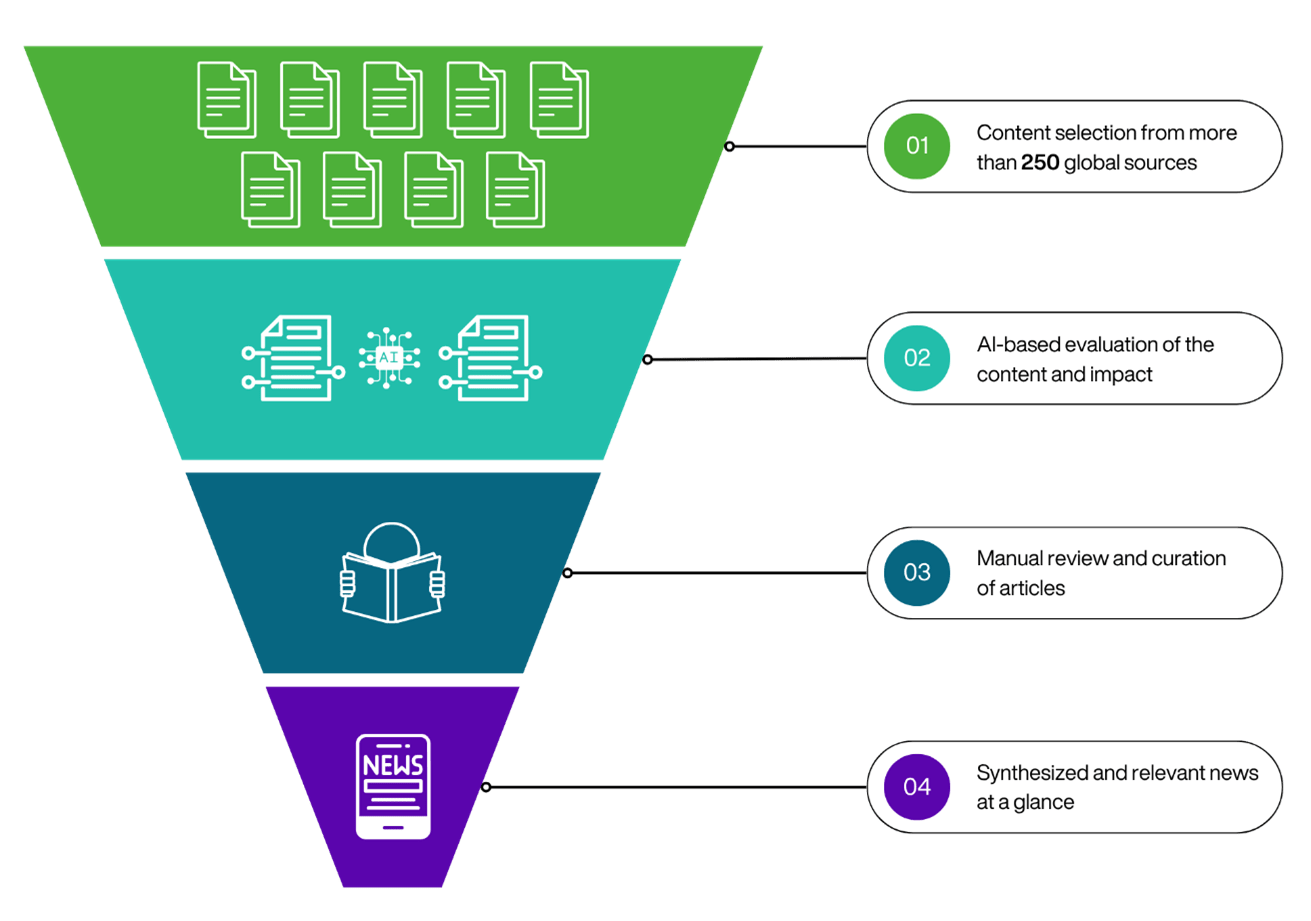
The Global Digi-Health Monitor is our weekly published newsletter featuring curated updates on the latest developments in digital health. With a focus on innovation and relevance, it brings together key news across topics such as AIArtificial Intelligence (AI) implies the attempt to transfer human learning and thinking to computers. Computer systems are intended to solve problems—for which a human would require intelligence—using large datasets. In the field of radiology, for example, artificial intelligence can assist physicians in diagnosing findings and detecting abnormali… Explained in the video. in healthcare, wearables,Wearables refer to technologies in the form of sensors or mobile applications that collect health data asynchronously and beyond the boundaries of medical care. They include wristbands, smartwatches, and other mobile sensors. These measure and collect data such as blood glucose levels, pulse, or sleep data, and transmit this information either auto… telemedicine,Telemedicine encompasses various healthcare delivery concepts characterized by direct patient care across geographical distances or time delays. This includes diagnostic, therapeutic, rehabilitative, and consultative services delivered through information and communication technologies. Particularly with regard to rural areas, telemedicine offers s… Explained in the video. cybersecurity, and more.
Our process is designed to be both scalable and selective. A broad network of over 250 global sources is continuously screened using six different AIArtificial Intelligence (AI) implies the attempt to transfer human learning and thinking to computers. Computer systems are intended to solve problems—for which a human would require intelligence—using large datasets. In the field of radiology, for example, artificial intelligence can assist physicians in diagnosing findings and detecting abnormali… Explained in the video. tools. These tools help surface relevant content, which is then passed through a multi-step filtering and evaluation process that emphasizes innovation and impact.
In the final stage, selected articles are reviewed and curated by our team before being published. The result is a dynamic, well-structured view of what truly matters in the digital health ecosystem. This way you always stay ahead of the curve.
Contact
E-Mail:
atlas-itg@uni-wh.deInnovation in Healthcare
Alfred-Herrhausen-Straße 50
58448 Witten, Germany