

DIGI-HEALTH MONITOR Calendar Week 30, 2025
DIGI-HEALTH MONITOR:
Calendar Week 30, 2025
Shanghai’s Model Hospital of the Future (Metaverse & Generative AIArtificial Intelligence (AI) implies the attempt to transfer human learning and thinking to computers. Computer systems are intended to solve problems—for which a human would require intelligence—using large datasets. In the field of radiology, for example, artificial intelligence can assist physicians in diagnosing findings and detecting abnormali… Explained in the video. Pilot)
Zhongshan Hospital’s pilot, reported on July 23, 2025, integrates the metaverse and generative AIArtificial Intelligence (AI) implies the attempt to transfer human learning and thinking to computers. Computer systems are intended to solve problems—for which a human would require intelligence—using large datasets. In the field of radiology, for example, artificial intelligence can assist physicians in diagnosing findings and detecting abnormali… Explained in the video. to revolutionize care. Creating immersive patient experiences and optimizing workflows, it enhances diagnostic accuracy and personalizes treatments. The metaverse engages patients interactively, while AIArtificial Intelligence (AI) implies the attempt to transfer human learning and thinking to computers. Computer systems are intended to solve problems—for which a human would require intelligence—using large datasets. In the field of radiology, for example, artificial intelligence can assist physicians in diagnosing findings and detecting abnormali… Explained in the video. aids clinicians’ decision-making. This pioneering initiative showcases AI’s potential to transform healthcare delivery, improving outcomes ու outcomes and streamlining operations, positioning it as a blueprint for future hospitals with significant system-level impact.
Tomorrow’s Cure: Mayo Clinic Experts Explore Predictive Medicine Using Genomics, AI,Artificial Intelligence (AI) implies the attempt to transfer human learning and thinking to computers. Computer systems are intended to solve problems—for which a human would require intelligence—using large datasets. In the field of radiology, for example, artificial intelligence can assist physicians in diagnosing findings and detecting abnormali… Explained in the video. and Multiomics
Published on July 16, 2025, by Deb Balzer, this piece delves into the revolutionary frontier of-Predictive medicine, showcasing how experts at Mayo Clinic are leveraging cutting-edge technology and data-driven approaches to anticipate disease before symptoms even manifest. The innovative approach involves integrating multiomics—an individual’s gene profile, RNA profile, and protein profile—with daily environmental exposures. This comprehensive data integration, previously a formidable challenge, is now being overcome by advanced technologies, particularly artificial intelligence.Artificial Intelligence (AI) implies the attempt to transfer human learning and thinking to computers. Computer systems are intended to solve problems—for which a human would require intelligence—using large datasets. In the field of radiology, for example, artificial intelligence can assist physicians in diagnosing findings and detecting abnormali… Explained in the video. Experts believe that AIArtificial Intelligence (AI) implies the attempt to transfer human learning and thinking to computers. Computer systems are intended to solve problems—for which a human would require intelligence—using large datasets. In the field of radiology, for example, artificial intelligence can assist physicians in diagnosing findings and detecting abnormali… Explained in the video. and sophisticated data analytics will significantly accelerate the translation of laboratory discoveries into patient treatments, drastically reducing the traditional 17-year timeline for medical breakthroughs. The overarching vision is to transform healthcare into a more proactive, personalized, and effective system, enabling interventions before illness takes hold and tailoring treatments to the unique characteristics of each individual and their specific disease, such as cancer.
Orbital Therapeutics Presents Promising Preclinical Data for AI-Guided In Vivo CAR-T Therapy for Autoimmune Disease
Published on July 23, 2025, this report highlights encouraging preclinical results from Orbital Therapeutics for its lead RNA immunotherapy candidate, OTX-201, aimed at autoimmune diseases. Data presented at the 5th Annual mRNA-Based Therapeutics Summit showed that this in vivo CAR-T approach achieved full B cell depletion in non-human primate studies, a critical step for immune system reset in autoimmune conditions. Orbital is advancing OTX-201 towards clinical development in early 2026. Built with a fully integrated platform spanning circular and linear RNA, targeted delivery, and AI-guided design, this method allows the patient’s body to produce CAR-T cells, reducing treatment burden and improving accessibility compared to conventional ex vivo CAR-T therapies. Orbital targets over 40 B cell-driven autoimmune disease indications across rheumatology, neurology, and dermatology, showcasing AI’s profound impact on advanced therapeutic development.
Te Whatu Ora Endorses Two Ambient AIArtificial Intelligence (AI) implies the attempt to transfer human learning and thinking to computers. Computer systems are intended to solve problems—for which a human would require intelligence—using large datasets. In the field of radiology, for example, artificial intelligence can assist physicians in diagnosing findings and detecting abnormali… Explained in the video. Scribes
New Zealand’s health system endorsed AIArtificial Intelligence (AI) implies the attempt to transfer human learning and thinking to computers. Computer systems are intended to solve problems—for which a human would require intelligence—using large datasets. In the field of radiology, for example, artificial intelligence can assist physicians in diagnosing findings and detecting abnormali… Explained in the video. tools on July 23, 2025, for transcribing consultations and generating clinical notes, easing administrative burdens. Automating these tasks allows clinicians to prioritize patient care, boosting efficiency and outcomes. This adoption highlights AI’s role in streamlining workflows, offering a scalable solution with significant potential to enhance healthcare delivery across systems, reducing staff burnout and improving service quality.
Riding the AIArtificial Intelligence (AI) implies the attempt to transfer human learning and thinking to computers. Computer systems are intended to solve problems—for which a human would require intelligence—using large datasets. In the field of radiology, for example, artificial intelligence can assist physicians in diagnosing findings and detecting abnormali… Explained in the video. Wave in APAC Healthcare – Strategies for Responsible AIArtificial Intelligence (AI) implies the attempt to transfer human learning and thinking to computers. Computer systems are intended to solve problems—for which a human would require intelligence—using large datasets. In the field of radiology, for example, artificial intelligence can assist physicians in diagnosing findings and detecting abnormali… Explained in the video. Adoption
At HIMSS25 APAC, reported on July 23, 2025, health IT leaders outlined strategies for responsibly adopting AIArtificial Intelligence (AI) implies the attempt to transfer human learning and thinking to computers. Computer systems are intended to solve problems—for which a human would require intelligence—using large datasets. In the field of radiology, for example, artificial intelligence can assist physicians in diagnosing findings and detecting abnormali… Explained in the video. in healthcare. Enhancing diagnostics, personalizing treatments, and improving predictive analytics, AI’s potential is balanced with patient safety and privacy concerns. Ethical frameworks and regulations ensure its benefits—better care and efficiency—are maximized without risks. This strategic focus positions AIArtificial Intelligence (AI) implies the attempt to transfer human learning and thinking to computers. Computer systems are intended to solve problems—for which a human would require intelligence—using large datasets. In the field of radiology, for example, artificial intelligence can assist physicians in diagnosing findings and detecting abnormali… Explained in the video. as a transformative force in the Asia-Pacific, with broad relevance for regional health systems.
The Global Digi-Health Monitor is our weekly published newsletter featuring curated updates on the latest developments in digital health. With a focus on innovation and relevance, it brings together key news across topics such as AIArtificial Intelligence (AI) implies the attempt to transfer human learning and thinking to computers. Computer systems are intended to solve problems—for which a human would require intelligence—using large datasets. In the field of radiology, for example, artificial intelligence can assist physicians in diagnosing findings and detecting abnormali… Explained in the video. in healthcare, wearables,Wearables refer to technologies in the form of sensors or mobile applications that collect health data asynchronously and beyond the boundaries of medical care. They include wristbands, smartwatches, and other mobile sensors. These measure and collect data such as blood glucose levels, pulse, or sleep data, and transmit this information either auto… telemedicine,Telemedicine encompasses various healthcare delivery concepts characterized by direct patient care across geographical distances or time delays. This includes diagnostic, therapeutic, rehabilitative, and consultative services delivered through information and communication technologies. Particularly with regard to rural areas, telemedicine offers s… Explained in the video. cybersecurity, and more.
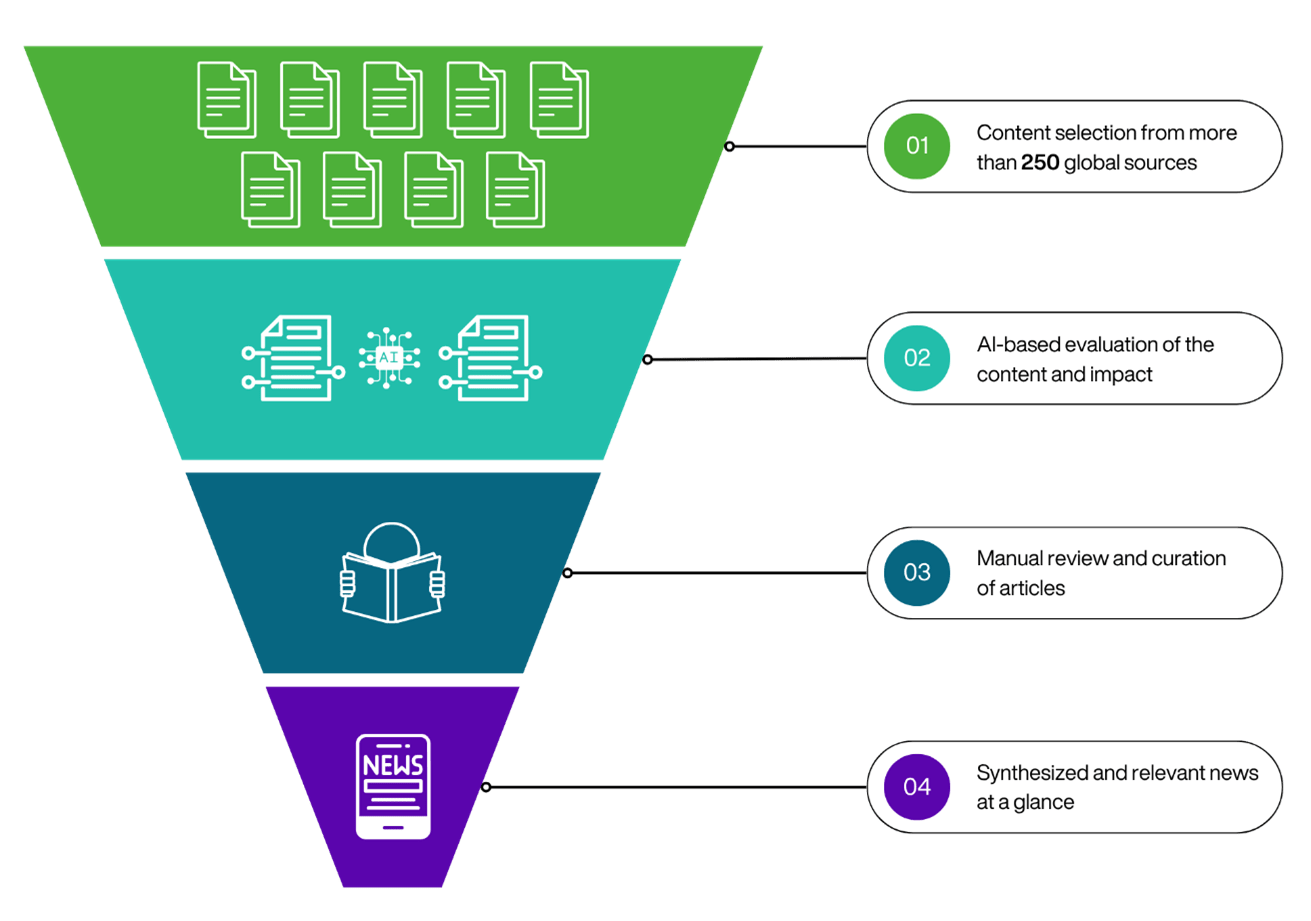
Our process is designed to be both scalable and selective. A broad network of over 250 global sources is continuously screened using six different AIArtificial Intelligence (AI) implies the attempt to transfer human learning and thinking to computers. Computer systems are intended to solve problems—for which a human would require intelligence—using large datasets. In the field of radiology, for example, artificial intelligence can assist physicians in diagnosing findings and detecting abnormali… Explained in the video. tools. These tools help surface relevant content, which is then passed through a multi-step filtering and evaluation process that emphasizes innovation and impact.
In the final stage, selected articles are reviewed and curated by our team before being published. The result is a dynamic, well-structured view of what truly matters in the digital health ecosystem. This way you always stay ahead of the curve.
Contact
E-Mail:
atlas-itg@uni-wh.deInnovation in Healthcare
Alfred-Herrhausen-Straße 50
58448 Witten, Germany