

DIGI-HEALTH MONITOR Calendar Week 28, 2025
DIGI-HEALTH MONITOR:
Calendar Week 28, 2025
What Does the 10 Year Plan Mean for Digital?
Unveiled in July 2025, the UK government’s 10-year health plan for the NHS charts a bold course toward a “digital by default” healthcare system. Key initiatives include integrating real-time data from wearablesWearables refer to technologies in the form of sensors or mobile applications that collect health data asynchronously and beyond the boundaries of medical care. They include wristbands, smartwatches, and other mobile sensors. These measure and collect data such as blood glucose levels, pulse, or sleep data, and transmit this information either auto… and biometric sensors into the NHS App, empowering patients with personalized, proactive care tools. A single patient record (SPR) system, beginning with maternity care, aims to unify medical data, enhancing safety, continuity, and interoperability across services. The plan also signals a shift toward ambient AIArtificial Intelligence (AI) implies the attempt to transfer human learning and thinking to computers. Computer systems are intended to solve problems—for which a human would require intelligence—using large datasets. In the field of radiology, for example, artificial intelligence can assist physicians in diagnosing findings and detecting abnormali… Explained in the video. technologies, embedding automation and digital tools throughout NHS operations. This strategic vision promises improved patient choice, streamlined data sharing, and a pivot to preventive, data-driven healthcare. By dissecting the plan’s components and their implications, the article reveals how these developments could position the NHS as a global leader in digital health transformation, with profound effects on patient care and system efficiency over the next decade.
Global Wearable Health Tech News – June and July 2025
Mid-2025 has seen a wave of advancements in wearable health technology, detailed in this global roundup. The FDA’s clearance of the Felix NeuroAI Therapeutic Wristband, the first wrist-worn neuromodulation device for essential tremor, offers continuous, non-invasive relief backed by clinical trials. Other innovations include integrated diabetes management patches, non-invasive blood glucose and pressure monitors, and AI-driven predictive health platforms. Regulatory approvals are shifting toward therapeutic wearables,Wearables refer to technologies in the form of sensors or mobile applications that collect health data asynchronously and beyond the boundaries of medical care. They include wristbands, smartwatches, and other mobile sensors. These measure and collect data such as blood glucose levels, pulse, or sleep data, and transmit this information either auto… moving beyond mere monitoring to active intervention, a trend highlighted by these developments. Consumer demand for actionable health insights and the integration of wearablesWearables refer to technologies in the form of sensors or mobile applications that collect health data asynchronously and beyond the boundaries of medical care. They include wristbands, smartwatches, and other mobile sensors. These measure and collect data such as blood glucose levels, pulse, or sleep data, and transmit this information either auto… into telehealthTelemedicine encompasses various healthcare delivery concepts characterized by direct patient care across geographical distances or time delays. This includes diagnostic, therapeutic, rehabilitative, and consultative services delivered through information and communication technologies. Particularly with regard to rural areas, telemedicine offers s… Explained in the video. systems are driving their indispensability in chronic disease management. By cataloging these breakthroughs, the report illustrates the sector’s rapid evolution, blending technological sophistication with clinical validation to enhance patient care and expand market reach, positioning wearablesWearables refer to technologies in the form of sensors or mobile applications that collect health data asynchronously and beyond the boundaries of medical care. They include wristbands, smartwatches, and other mobile sensors. These measure and collect data such as blood glucose levels, pulse, or sleep data, and transmit this information either auto… as a cornerstone of modern healthcare delivery.
New AIArtificial Intelligence (AI) implies the attempt to transfer human learning and thinking to computers. Computer systems are intended to solve problems—for which a human would require intelligence—using large datasets. In the field of radiology, for example, artificial intelligence can assist physicians in diagnosing findings and detecting abnormali… Explained in the video. tool is better than doctors at diagnosing complicated medical issues, Microsoft says
Microsoft’s latest AIArtificial Intelligence (AI) implies the attempt to transfer human learning and thinking to computers. Computer systems are intended to solve problems—for which a human would require intelligence—using large datasets. In the field of radiology, for example, artificial intelligence can assist physicians in diagnosing findings and detecting abnormali… Explained in the video. diagnostic system, unveiled in July 2025, claims superiority over human doctors in tackling complex medical issues. Promising to cut diagnostic errors and streamline clinical workflows, this tool could herald a new era in healthcare precision. Its potential to boost patient outcomes and efficiency is significant, though the article notes that independent validation is still needed to confirm its real-world impact and limitations. By spotlighting this development, the piece positions AIArtificial Intelligence (AI) implies the attempt to transfer human learning and thinking to computers. Computer systems are intended to solve problems—for which a human would require intelligence—using large datasets. In the field of radiology, for example, artificial intelligence can assist physicians in diagnosing findings and detecting abnormali… Explained in the video. as a game-changer in clinical decision-making, offering a glimpse into a future where technology augments human expertise. While details on its methodology remain sparse, the claim alone underscores AI’s advancing role in digital health, with implications for diagnostic accuracy and healthcare delivery that could rippleA cryptocurrency is a digital or virtual currency secured by cryptographic encryption. Digital currencies are bought, sold, and transferred over the internet using cryptography. Cryptocurrencies enable cashless payments without dependence on, oversight by, or involvement of banks or authorities.Examples of cryptocurrencies include Bitcoin, Ripple,… across systems if proven effective.
AIArtificial Intelligence (AI) implies the attempt to transfer human learning and thinking to computers. Computer systems are intended to solve problems—for which a human would require intelligence—using large datasets. In the field of radiology, for example, artificial intelligence can assist physicians in diagnosing findings and detecting abnormali… Explained in the video. transforms healthcare for faster, smarter care in emergency crises
AIArtificial Intelligence (AI) implies the attempt to transfer human learning and thinking to computers. Computer systems are intended to solve problems—for which a human would require intelligence—using large datasets. In the field of radiology, for example, artificial intelligence can assist physicians in diagnosing findings and detecting abnormali… Explained in the video. is revolutionizing emergency healthcare in 2025, enhancing decision-making, resource allocation, and aid delivery during crises. Highlighted in this July report, these technologies enable providers to respond swiftly and effectively, channeling critical resources where they’re most needed. By optimizing crisis response, AIArtificial Intelligence (AI) implies the attempt to transfer human learning and thinking to computers. Computer systems are intended to solve problems—for which a human would require intelligence—using large datasets. In the field of radiology, for example, artificial intelligence can assist physicians in diagnosing findings and detecting abnormali… Explained in the video. promises to save lives and boost healthcare efficiency in high-stakes scenarios. While specifics are thin, the focus on speed and intelligence suggests practical applications with broad potential, from disaster zones to urban emergencies. This development underscores AI’s growing role in addressing urgent healthcare challenges, offering a glimpse into a future where technology drives smarter, more agile care systems with significant impact on patient survival and resource management.
Why It Is Crucial to Involve Nurses in AIArtificial Intelligence (AI) implies the attempt to transfer human learning and thinking to computers. Computer systems are intended to solve problems—for which a human would require intelligence—using large datasets. In the field of radiology, for example, artificial intelligence can assist physicians in diagnosing findings and detecting abnormali… Explained in the video. Development Processes
Published on July 7, 2025, by the Institute for Healthcare Improvement, this piece champions nurses’ vital role in AIArtificial Intelligence (AI) implies the attempt to transfer human learning and thinking to computers. Computer systems are intended to solve problems—for which a human would require intelligence—using large datasets. In the field of radiology, for example, artificial intelligence can assist physicians in diagnosing findings and detecting abnormali… Explained in the video. development for healthcare. Frontline caregivers bring unmatched insights into clinical workflows, patient needs, and practical technology use, ensuring AIArtificial Intelligence (AI) implies the attempt to transfer human learning and thinking to computers. Computer systems are intended to solve problems—for which a human would require intelligence—using large datasets. In the field of radiology, for example, artificial intelligence can assist physicians in diagnosing findings and detecting abnormali… Explained in the video. tools are effective and user-friendly. Research shows their exclusion risks creating disconnected solutions, potentially harming care quality and adoption. The article pushes for nurse involvement from design to implementation, arguing this collaboration crafts AIArtificial Intelligence (AI) implies the attempt to transfer human learning and thinking to computers. Computer systems are intended to solve problems—for which a human would require intelligence—using large datasets. In the field of radiology, for example, artificial intelligence can assist physicians in diagnosing findings and detecting abnormali… Explained in the video. that enhances rather than burdens healthcare delivery. While not unveiling new tech, it offers a strategic perspective on improving AI’s real-world impact, with implications for better patient outcomes and system efficiency through a more inclusive development process.
The Global Digi-Health Monitor is our weekly published newsletter featuring curated updates on the latest developments in digital health. With a focus on innovation and relevance, it brings together key news across topics such as AIArtificial Intelligence (AI) implies the attempt to transfer human learning and thinking to computers. Computer systems are intended to solve problems—for which a human would require intelligence—using large datasets. In the field of radiology, for example, artificial intelligence can assist physicians in diagnosing findings and detecting abnormali… Explained in the video. in healthcare, wearables,Wearables refer to technologies in the form of sensors or mobile applications that collect health data asynchronously and beyond the boundaries of medical care. They include wristbands, smartwatches, and other mobile sensors. These measure and collect data such as blood glucose levels, pulse, or sleep data, and transmit this information either auto… telemedicine,Telemedicine encompasses various healthcare delivery concepts characterized by direct patient care across geographical distances or time delays. This includes diagnostic, therapeutic, rehabilitative, and consultative services delivered through information and communication technologies. Particularly with regard to rural areas, telemedicine offers s… Explained in the video. cybersecurity, and more.
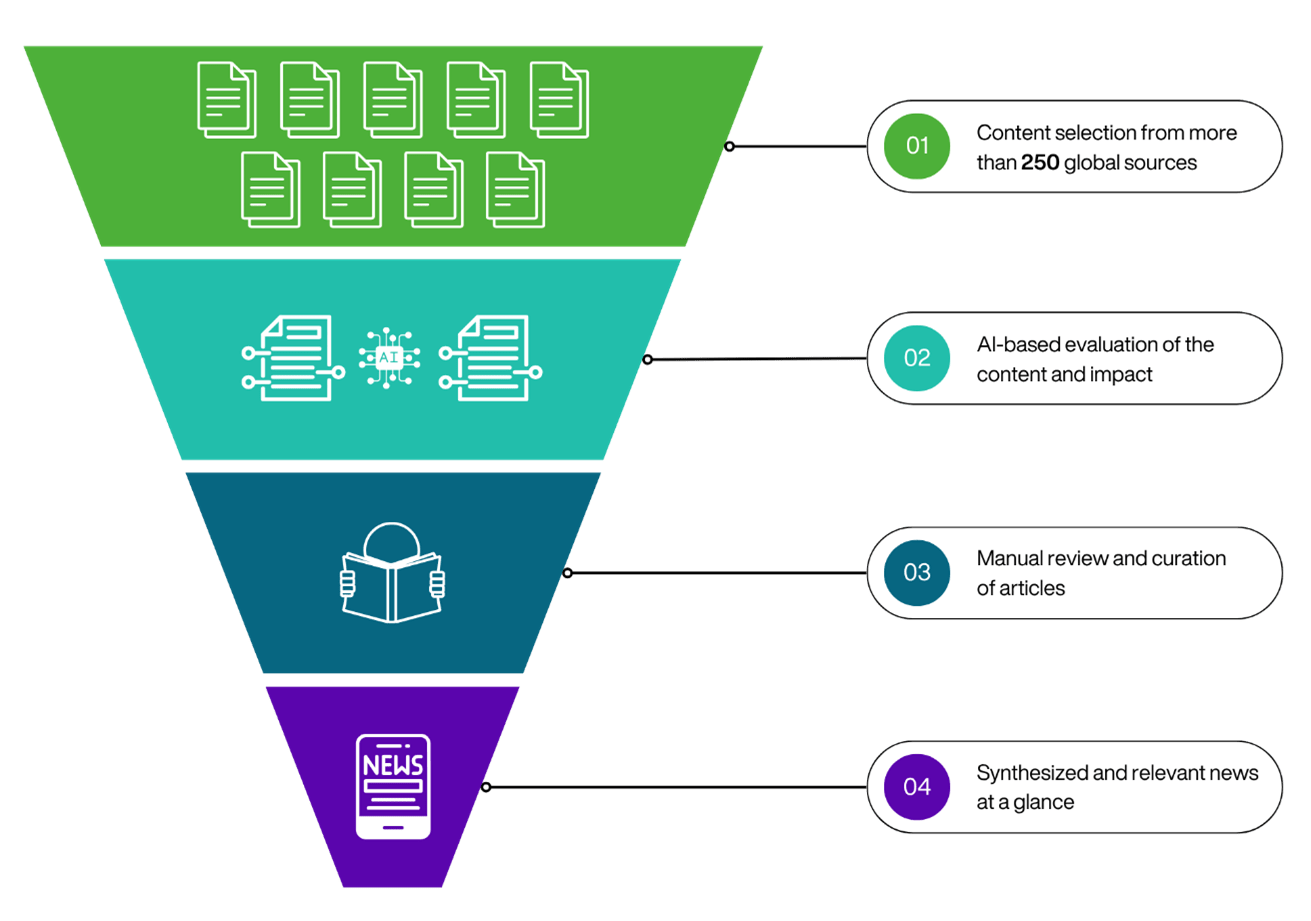
Our process is designed to be both scalable and selective. A broad network of over 250 global sources is continuously screened using six different AIArtificial Intelligence (AI) implies the attempt to transfer human learning and thinking to computers. Computer systems are intended to solve problems—for which a human would require intelligence—using large datasets. In the field of radiology, for example, artificial intelligence can assist physicians in diagnosing findings and detecting abnormali… Explained in the video. tools. These tools help surface relevant content, which is then passed through a multi-step filtering and evaluation process that emphasizes innovation and impact.
In the final stage, selected articles are reviewed and curated by our team before being published. The result is a dynamic, well-structured view of what truly matters in the digital health ecosystem. This way you always stay ahead of the curve.
Contact
E-Mail:
atlas-itg@uni-wh.deInnovation in Healthcare
Alfred-Herrhausen-Straße 50
58448 Witten, Germany