

DIGI-HEALTH MONITOR Calendar Week 24, 2025
DIGI-HEALTH MONITOR:
Calendar Week 24, 2025
Patient Demographics and Trust Shape Global AIArtificial Intelligence (AI) implies the attempt to transfer human learning and thinking to computers. Computer systems are intended to solve problems—for which a human would require intelligence—using large datasets. In the field of radiology, for example, artificial intelligence can assist physicians in diagnosing findings and detecting abnormali… Explained in the video. Healthcare Acceptance
A comprehensive study of 13,806 patients across 43 countries reveals cautiously optimistic attitudes toward AIArtificial Intelligence (AI) implies the attempt to transfer human learning and thinking to computers. Computer systems are intended to solve problems—for which a human would require intelligence—using large datasets. In the field of radiology, for example, artificial intelligence can assist physicians in diagnosing findings and detecting abnormali… Explained in the video. in healthcare, with 57.6% expressing positive views despite significant demographic divides. Women, patients in poor health, and those with limited technological literacy show notably less enthusiasm for AIArtificial Intelligence (AI) implies the attempt to transfer human learning and thinking to computers. Computer systems are intended to solve problems—for which a human would require intelligence—using large datasets. In the field of radiology, for example, artificial intelligence can assist physicians in diagnosing findings and detecting abnormali… Explained in the video. adoption. Trust emerges as the critical factor—only 41.8% trust AI’s accuracy in predicting treatment responses, the lowest confidence level recorded. Patients overwhelmingly prefer explainable AIArtificial Intelligence (AI) implies the attempt to transfer human learning and thinking to computers. Computer systems are intended to solve problems—for which a human would require intelligence—using large datasets. In the field of radiology, for example, artificial intelligence can assist physicians in diagnosing findings and detecting abnormali… Explained in the video. systems and physician-led decision-making, even at the cost of slightly reduced accuracy. Major concerns center on data security, diminished doctor-patient relationships, and potential cost increases. The research, spanning six continents through the COMFORT network, underscores that successful AIArtificial Intelligence (AI) implies the attempt to transfer human learning and thinking to computers. Computer systems are intended to solve problems—for which a human would require intelligence—using large datasets. In the field of radiology, for example, artificial intelligence can assist physicians in diagnosing findings and detecting abnormali… Explained in the video. implementation in healthcare requires tailored approaches addressing local patient populations’ unique characteristics and concerns rather than one-size-fits-all solutions.
Precision MedicineIn precision medicine, also known as personalized medicine, the focus is on a patient’s individual characteristics and circumstances. This “tailored therapy” is considered one of the major medical trends of the 21st century.In practice, precision medicine means searching for changes in a patient’s genetic code through geneti… Evolution: From Genetic Matching to Functional Drug Testing for Cancer Resistance
Dr. Caroline Heckman from Finland’s Institute for Molecular Medicine is pioneering functional precision medicineIn precision medicine, also known as personalized medicine, the focus is on a patient’s individual characteristics and circumstances. This “tailored therapy” is considered one of the major medical trends of the 21st century.In practice, precision medicine means searching for changes in a patient’s genetic code through geneti… approaches that transcend traditional genetic-drug matching by combining multiomics analysis with ex vivo drug sensitivity testing to address cancer’s fundamental challenge—tumor heterogeneity and treatment resistance evolution. While historical precision medicineIn precision medicine, also known as personalized medicine, the focus is on a patient’s individual characteristics and circumstances. This “tailored therapy” is considered one of the major medical trends of the 21st century.In practice, precision medicine means searching for changes in a patient’s genetic code through geneti… focused on matching specific genetic alterations with targeted therapies, Heckman’s approach screens all approved drugs rather than condition-specific treatments, enabling drug repositioning opportunities for patients who no longer respond to standard care and helping pharmaceutical companies identify responsive patient populations for clinical trials. Her methodology involves analyzing patient samples at different disease stages to understand progression mechanisms, creating personalized treatment strategies that leverage existing approved medications in novel applications—a more sustainable and economical approach than developing entirely new drugs. Looking toward the next five years, Heckman envisions expanding beyond next-generation sequencing to incorporate proteomics and functional platforms into routine clinical practice, though implementation will require scaling down from comprehensive screening approaches to focused, targeted panels—similar to how whole genome sequencing evolved into targeted panel sequencing. The transition from research to clinic demands industry collaboration to develop streamlined assays that maintain predictive accuracy while becoming practically implementable across different medical centers, potentially transforming cancer treatment from reactive standard protocols to proactive, personalized therapeutic strategies based on real-time tumor biology analysis.
Stanford’s ChatEHR Transforms Medical Records into Conversational AIArtificial Intelligence (AI) implies the attempt to transfer human learning and thinking to computers. Computer systems are intended to solve problems—for which a human would require intelligence—using large datasets. In the field of radiology, for example, artificial intelligence can assist physicians in diagnosing findings and detecting abnormali… Explained in the video. Interface
Stanford Medicine has developed ChatEHR, a groundbreaking AIArtificial Intelligence (AI) implies the attempt to transfer human learning and thinking to computers. Computer systems are intended to solve problems—for which a human would require intelligence—using large datasets. In the field of radiology, for example, artificial intelligence can assist physicians in diagnosing findings and detecting abnormali… Explained in the video. software that allows clinicians to interact conversationally with electronic health records, transforming time-consuming chart reviews into streamlined question-and-answer sessions. Currently piloted with 33 healthcare providers, the system enables physicians to ask natural language questions like Does this patient have allergies? or What does their latest cholesterol test show? while automatically generating comprehensive chart summaries from within the secure medical record system. The technology addresses critical workflow inefficiencies—particularly in emergency situations where doctors must rapidly synthesize hundreds of pages of patient history—by providing instant access to relevant medical information without compromising clinical decision-making authority. Beyond simple queries, ChatEHR features ‘automations’ that perform evaluative tasks such as determining patient transfer eligibility or hospice care recommendations, potentially saving significant administrative burden. Built with responsible AIArtificial Intelligence (AI) implies the attempt to transfer human learning and thinking to computers. Computer systems are intended to solve problems—for which a human would require intelligence—using large datasets. In the field of radiology, for example, artificial intelligence can assist physicians in diagnosing findings and detecting abnormali… Explained in the video. guidelines and evaluated through Stanford’s MedHELM framework, the system includes developing citation features to show information sources and maintains strict security protocols by pulling data directly from authenticated medical records. While designed as an information-gathering tool rather than a diagnostic aid, ChatEHR represents a significant step toward making electronic health records more user-friendly, allowing physicians to spend less time navigating complex documentation systems and more time providing direct patient care.
MUSC Health’s Hybrid TelehealthTelemedicine encompasses various healthcare delivery concepts characterized by direct patient care across geographical distances or time delays. This includes diagnostic, therapeutic, rehabilitative, and consultative services delivered through information and communication technologies. Particularly with regard to rural areas, telemedicine offers s… Explained in the video. Program Breaks Down Care Barriers for Unhoused Populations
MUSC Health’s innovative CARES for the Unhoused program demonstrates how strategic telehealthTelemedicine encompasses various healthcare delivery concepts characterized by direct patient care across geographical distances or time delays. This includes diagnostic, therapeutic, rehabilitative, and consultative services delivered through information and communication technologies. Particularly with regard to rural areas, telemedicine offers s… Explained in the video. integration can overcome traditional healthcare barriers, providing comprehensive care to Charleston’s unhoused population through a hybrid model combining in-person visits at community-based organizations, virtual consultations, and street medicine outreach. Launched in 2018 and now serving 500 visits annually with 250 patients, the program deploys resident physicians, nursing students, and specialty coordinators who meet patients ‘where they are’—whether at social service locations or literally under bridges—using telehealthTelemedicine encompasses various healthcare delivery concepts characterized by direct patient care across geographical distances or time delays. This includes diagnostic, therapeutic, rehabilitative, and consultative services delivered through information and communication technologies. Particularly with regard to rural areas, telemedicine offers s… Explained in the video. to connect field teams with attending physicians for real-time clinical support. A recent stakeholder evaluation using the RE-AIM framework confirmed the program’s effectiveness, with patients praising provider reliability and accessibility while community partners highlighted the convenience of integrated healthcare delivery that addresses both medical and social needs simultaneously. Key success factors include maintaining close partnerships with social service agencies to provide wraparound care, respecting individual health goals rather than imposing medical agendas, and leveraging telehealth’s flexibility to accommodate the unique challenges unhoused individuals face in accessing traditional healthcare systems. The program continues expanding its scope by adding community health workers, coordinating with emergency services and law enforcement, and incorporating dental and point-of-care testing services, positioning telehealthTelemedicine encompasses various healthcare delivery concepts characterized by direct patient care across geographical distances or time delays. This includes diagnostic, therapeutic, rehabilitative, and consultative services delivered through information and communication technologies. Particularly with regard to rural areas, telemedicine offers s… Explained in the video. as an essential tool for addressing health equity gaps among vulnerable populations who face significant barriers to conventional medical care.
AIArtificial Intelligence (AI) implies the attempt to transfer human learning and thinking to computers. Computer systems are intended to solve problems—for which a human would require intelligence—using large datasets. In the field of radiology, for example, artificial intelligence can assist physicians in diagnosing findings and detecting abnormali… Explained in the video. Revolutionizes Medicine with Precision Gains and Persistent Human Oversight Needs
Artificial intelligenceArtificial Intelligence (AI) implies the attempt to transfer human learning and thinking to computers. Computer systems are intended to solve problems—for which a human would require intelligence—using large datasets. In the field of radiology, for example, artificial intelligence can assist physicians in diagnosing findings and detecting abnormali… Explained in the video. is rapidly transforming healthcare through sophisticated applications spanning diagnosis, treatment personalization, drug development, and administrative efficiency, yet significant challenges persist around bias, data privacy, and equitable access. Current AIArtificial Intelligence (AI) implies the attempt to transfer human learning and thinking to computers. Computer systems are intended to solve problems—for which a human would require intelligence—using large datasets. In the field of radiology, for example, artificial intelligence can assist physicians in diagnosing findings and detecting abnormali… Explained in the video. implementations include ambient documentation systems that reduce physician charting time by 16%, advanced imaging analysis that outperforms human radiologists in breast cancer detection, and robotic surgical assistance for enhanced precision. The technology excels at pattern recognition in massive datasets, enabling personalized treatment recommendations based on genetic profiles and accelerating drug discovery—exemplified by Rentosertib, the first AI-designed medication to reach clinical trials for lung disease treatment. However, critical limitations include training data gaps due to HIPAA restrictions, algorithmic bias that can perpetuate healthcare disparities, and high implementation costs that may exclude resource-limited facilities. While AIArtificial Intelligence (AI) implies the attempt to transfer human learning and thinking to computers. Computer systems are intended to solve problems—for which a human would require intelligence—using large datasets. In the field of radiology, for example, artificial intelligence can assist physicians in diagnosing findings and detecting abnormali… Explained in the video. offers transformative potential for rural healthcare access and chronic disease management through continuous monitoring, experts emphasize that human oversight remains essential to prevent clinical skill deterioration and ensure ethical deployment. The next five years will likely see expanded AIArtificial Intelligence (AI) implies the attempt to transfer human learning and thinking to computers. Computer systems are intended to solve problems—for which a human would require intelligence—using large datasets. In the field of radiology, for example, artificial intelligence can assist physicians in diagnosing findings and detecting abnormali… Explained in the video. integration, but success depends on addressing bias, maintaining human-centered care, and developing inclusive implementation strategies that don’t worsen existing healthcare inequities.
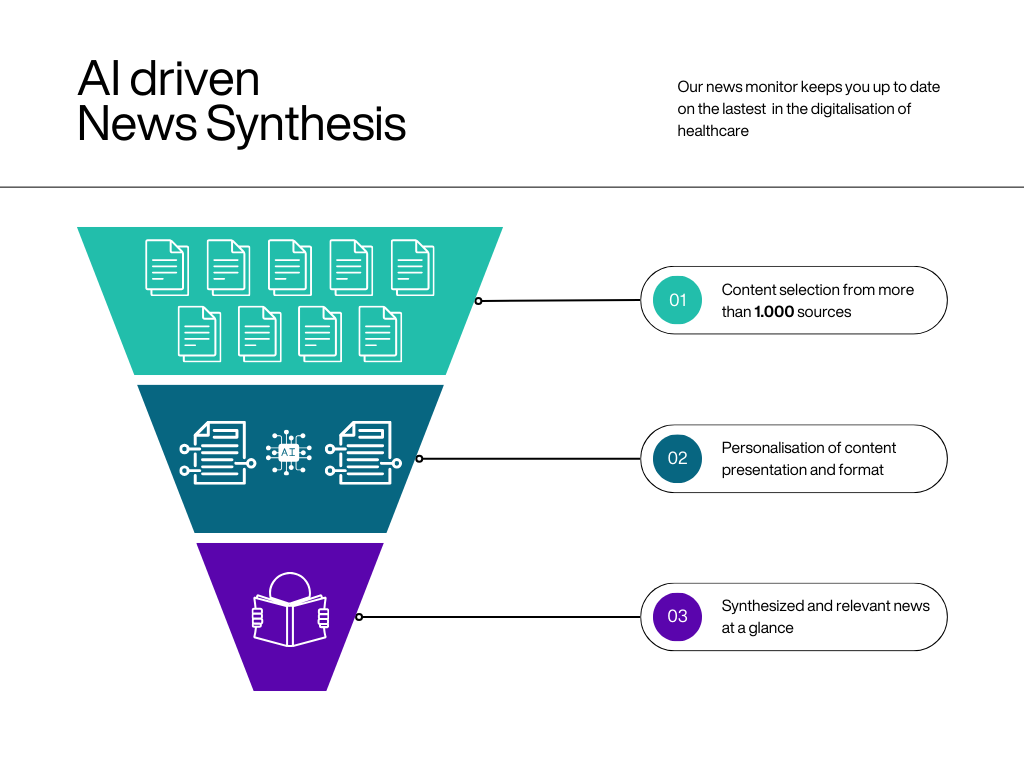
In collaboration with ATLAS Alumni Dr. Jonathan Koß and hisHospital information systems (HIS) encompass all information and communication systems within a hospital. These electronic systems enable the capture, storage, processing, and long-term use of data. Both medical and administrative data are made accessible to all staff within the hospital.Further purposes of hospital information systems include incr… Explained in the video. innovative start-up, MultiplyContent, we are combining state-of-the-art AIArtificial Intelligence (AI) implies the attempt to transfer human learning and thinking to computers. Computer systems are intended to solve problems—for which a human would require intelligence—using large datasets. In the field of radiology, for example, artificial intelligence can assist physicians in diagnosing findings and detecting abnormali… Explained in the video. with human oversight, to deliver tailored, engaging, and relevant news from across the globe. Expect highly curated news on everything digital in the global healthcare economy, sourced from over 1,000 articles each week. The AI-driven personalized content engine from Newsbutler gathers, prioritizes, and synthesizes the most important news based on our keyword parameters. Our team then reviews and further curates these results to bring you the most relevant and exciting updates each week.
Contact
E-Mail:
atlas-itg@uni-wh.deInnovation in Healthcare
Alfred-Herrhausen-Straße 50
58448 Witten, Germany