

Telemedicine in Chronic Disease Management: Evidence from Norway
TelemedicineTelemedicine encompasses various healthcare delivery concepts characterized by direct patient care across geographical distances or time delays. This includes diagnostic, therapeutic, rehabilitative, and consultative services delivered through information and communication technologies. Particularly with regard to rural areas, telemedicine offers s… Explained in the video. has garnered increasing interest, and it holds the potential to play a crucial role in primary healthcare moving forward. The question arises: Is telemedicineTelemedicine encompasses various healthcare delivery concepts characterized by direct patient care across geographical distances or time delays. This includes diagnostic, therapeutic, rehabilitative, and consultative services delivered through information and communication technologies. Particularly with regard to rural areas, telemedicine offers s… Explained in the video. more efficient and cost-effective than traditional primary healthcare delivery?
Worldwide, many countries struggle with shortages of healthcare workers, while aging society leads to increased disease burden with high levels of morbidity from chronic diseases [1–7]. TelemedicineTelemedicine encompasses various healthcare delivery concepts characterized by direct patient care across geographical distances or time delays. This includes diagnostic, therapeutic, rehabilitative, and consultative services delivered through information and communication technologies. Particularly with regard to rural areas, telemedicine offers s… Explained in the video. and home monitoring promise affordable high-quality care in domestic settings and residential care [8, 9]. Despite its potential to revolutionize primary healthcare, telemedicineTelemedicine encompasses various healthcare delivery concepts characterized by direct patient care across geographical distances or time delays. This includes diagnostic, therapeutic, rehabilitative, and consultative services delivered through information and communication technologies. Particularly with regard to rural areas, telemedicine offers s… Explained in the video. faces significant challenges due to barriers like acceptance, technological limitations, reimbursement models, and cultural differences [1, 10, 11]. Empirical studies struggle to demonstrate telemedicine’s superiority over traditional care [12, 13].
Thus, the question remains: Is there comprehensive evidence that telemedicineTelemedicine encompasses various healthcare delivery concepts characterized by direct patient care across geographical distances or time delays. This includes diagnostic, therapeutic, rehabilitative, and consultative services delivered through information and communication technologies. Particularly with regard to rural areas, telemedicine offers s… Explained in the video. is more efficient and cost-effective than usual primary care?
A telemedicine-based Study in chronic Disease Management from Norway
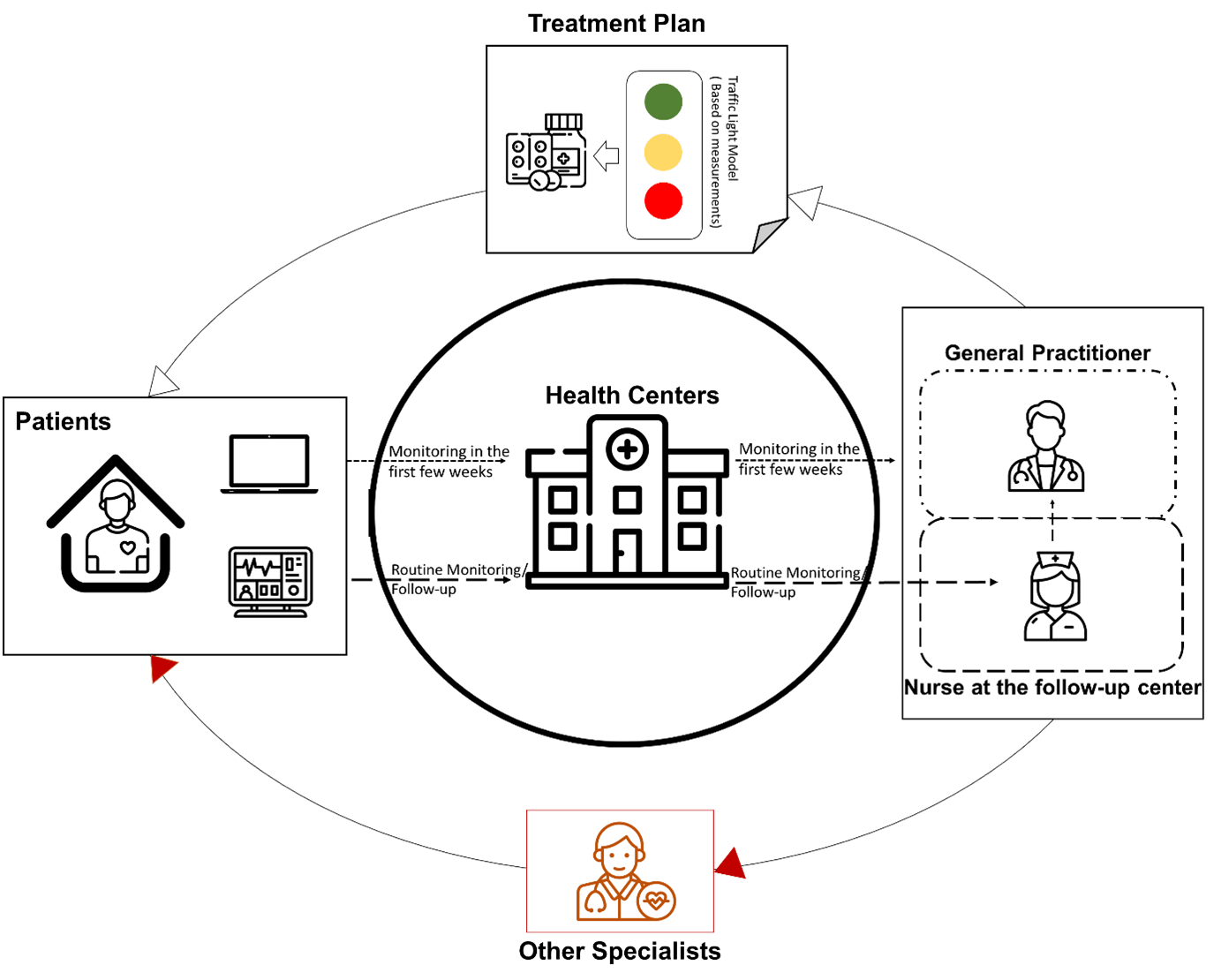
Sten-Gahmberg et al. (2024) initiated a telemedicineTelemedicine encompasses various healthcare delivery concepts characterized by direct patient care across geographical distances or time delays. This includes diagnostic, therapeutic, rehabilitative, and consultative services delivered through information and communication technologies. Particularly with regard to rural areas, telemedicine offers s… Explained in the video. study in primary healthcare, funded by the Norwegian Directorate of Health (NDH), by selecting six health centres[1]. These centres were responsible for recruiting volunteers, providing technical support for telemedicine,Telemedicine encompasses various healthcare delivery concepts characterized by direct patient care across geographical distances or time delays. This includes diagnostic, therapeutic, rehabilitative, and consultative services delivered through information and communication technologies. Particularly with regard to rural areas, telemedicine offers s… Explained in the video. and integrating services among general practitioners (GPs), follow-up agencies and other healthcare providers. Patients engaged in telemedicineTelemedicine encompasses various healthcare delivery concepts characterized by direct patient care across geographical distances or time delays. This includes diagnostic, therapeutic, rehabilitative, and consultative services delivered through information and communication technologies. Particularly with regard to rural areas, telemedicine offers s… Explained in the video. received a tablet computer and remote monitoring equipment, which they were trained to use at the health centre. The collected health dataHealth data, also referred to as patient data, encompasses all information relating to the health status of a person. This includes demographic records as well as medical history, vaccination status, and advance directives. Health data constitutes a special category of personal data under GDPR Article 9, subject to strict additional regulations due… was transmitted to a follow-up centre where nurses, patients, and GPs collaboratively created personalized treatment plans. Follow-up nurses continuously monitored the data, offered guidance, counselling, and medical support. If deviations from normal values occurred, follow-up professionals determined with the patient whether a referral to a GP or specialist is necessary.
Telemedicine-based Intervention vs. Traditional Intervention
Sten-Gahmberg et al. (2024) compared the outcomes between the complex and structured telemedicineTelemedicine encompasses various healthcare delivery concepts characterized by direct patient care across geographical distances or time delays. This includes diagnostic, therapeutic, rehabilitative, and consultative services delivered through information and communication technologies. Particularly with regard to rural areas, telemedicine offers s… Explained in the video. model and traditional treatment in managing chronic diseases. The study enrolled adults with at least one chronic health condition, including diabetes, heart failure, chronic obstructive pulmonary disease (COPD), cancer, and mental illness, totalling 636 participants. Through a pragmatic randomized trial, researchers assessed the effectiveness and cost-benefit of the telemedicineTelemedicine encompasses various healthcare delivery concepts characterized by direct patient care across geographical distances or time delays. This includes diagnostic, therapeutic, rehabilitative, and consultative services delivered through information and communication technologies. Particularly with regard to rural areas, telemedicine offers s… Explained in the video. intervention compared to usual care.
The analysis results revealed that the telemedicine-based follow-up showed increased patient satisfaction, security, and self-efficacy, and prevented health deterioration. It improved health outcomes and reduced the need for home-based care, although specialist service usage remained constant. Despite the cost-benefit analysis revealing higher costs than benefits, non-monetized gains like safety might justify the expenditure if targeted effectively.
Implementation of telemedicineTelemedicine encompasses various healthcare delivery concepts characterized by direct patient care across geographical distances or time delays. This includes diagnostic, therapeutic, rehabilitative, and consultative services delivered through information and communication technologies. Particularly with regard to rural areas, telemedicine offers s… Explained in the video. in Germany
Despite facing similar healthcare challenges as Norway, Germany’s telemedicineTelemedicine encompasses various healthcare delivery concepts characterized by direct patient care across geographical distances or time delays. This includes diagnostic, therapeutic, rehabilitative, and consultative services delivered through information and communication technologies. Particularly with regard to rural areas, telemedicine offers s… Explained in the video. adoption is suboptimal. A 2020 Deloitte survey revealed that only 30% of German healthcare providers use telemedicine,Telemedicine encompasses various healthcare delivery concepts characterized by direct patient care across geographical distances or time delays. This includes diagnostic, therapeutic, rehabilitative, and consultative services delivered through information and communication technologies. Particularly with regard to rural areas, telemedicine offers s… Explained in the video. substantially lower than the European average of 43% and Denmark’s 61% [14]. Further, Bitkom Research in 2022 reported that below 33% of physicians in German hospitals offer telemedicine-based services [15].
To enhance telemedicineTelemedicine encompasses various healthcare delivery concepts characterized by direct patient care across geographical distances or time delays. This includes diagnostic, therapeutic, rehabilitative, and consultative services delivered through information and communication technologies. Particularly with regard to rural areas, telemedicine offers s… Explained in the video. in Germany’s healthcare system, several key strategies are essential. These include the development of a national infrastructure and investment in a robust healthcare IT infrastructure for uniform standards and broad access [16, 17]. Comprehensive training for healthcare providers and patient education on telemedicineTelemedicine encompasses various healthcare delivery concepts characterized by direct patient care across geographical distances or time delays. This includes diagnostic, therapeutic, rehabilitative, and consultative services delivered through information and communication technologies. Particularly with regard to rural areas, telemedicine offers s… Explained in the video. technologies are also crucial to boost digital competence and acceptance [18]. Furthermore, promoting R&D for new telemedicineTelemedicine encompasses various healthcare delivery concepts characterized by direct patient care across geographical distances or time delays. This includes diagnostic, therapeutic, rehabilitative, and consultative services delivered through information and communication technologies. Particularly with regard to rural areas, telemedicine offers s… Explained in the video. applications and supporting projects to evaluate its effectiveness in various healthcare settings is vital. Lastly, updating policy frameworks to facilitate telemedicineTelemedicine encompasses various healthcare delivery concepts characterized by direct patient care across geographical distances or time delays. This includes diagnostic, therapeutic, rehabilitative, and consultative services delivered through information and communication technologies. Particularly with regard to rural areas, telemedicine offers s… Explained in the video. integration and reimbursement is necessary to align with contemporary healthcare trends.
Conclusion
The Norwegian study underscores telemedicine’s efficacy in managing chronic conditions. Despite the complexity and challenges of implementing telemedicine-based services in primary care, the results support its future use in primary care scenarios.
For Germany, broader telemedicineTelemedicine encompasses various healthcare delivery concepts characterized by direct patient care across geographical distances or time delays. This includes diagnostic, therapeutic, rehabilitative, and consultative services delivered through information and communication technologies. Particularly with regard to rural areas, telemedicine offers s… Explained in the video. adoption could tackle key healthcare challenges. By fortifying digital infrastructure, fostering digital competence, promoting telemedicineTelemedicine encompasses various healthcare delivery concepts characterized by direct patient care across geographical distances or time delays. This includes diagnostic, therapeutic, rehabilitative, and consultative services delivered through information and communication technologies. Particularly with regard to rural areas, telemedicine offers s… Explained in the video. R&D, and refining health policies, Germany could revolutionize primary healthcare and set a global benchmark.
Also read: Smart TV als Remote Care Lösung

Contact
E-Mail:
atlas-itg@uni-wh.deInnovation in Healthcare
Alfred-Herrhausen-Straße 50
58448 Witten, Germany