

Leveling Up Healthcare Education: A Lucrative Opportunity for Investors and Health Entrepreneurs in Serious Games and Gamification
Serious games and gamificationGamification describes the use of game-typical elements in a non-game context. The goal is to change user behavior and increase motivation. This approach is used to make otherwise monotonous processes (e.g., surveys) more engaging, or to sustain user motivation during demanding tasks. Typical game elements include progress indicators, leaderboards,… are emerging as powerful tools in healthcare education. Explore how these game-based approaches are perceived by health professionals, revealing significant market opportunities for forward-thinking investors and entrepreneurs.
Introduction
In recent years, there has been a rapid increase in the availability and prevalence of handheld devices such as tablets, wearables,Wearables refer to technologies in the form of sensors or mobile applications that collect health data asynchronously and beyond the boundaries of medical care. They include wristbands, smartwatches, and other mobile sensors. These measure and collect data such as blood glucose levels, pulse, or sleep data, and transmit this information either auto… and smartphones, along with advancements in commercial gaming consoles [1]. This trend has notably impacted health professional education, fostering innovative teaching methods, including game-based learning. The focus of such developments is to enhance educational practices and ultimately improve patient care [2].
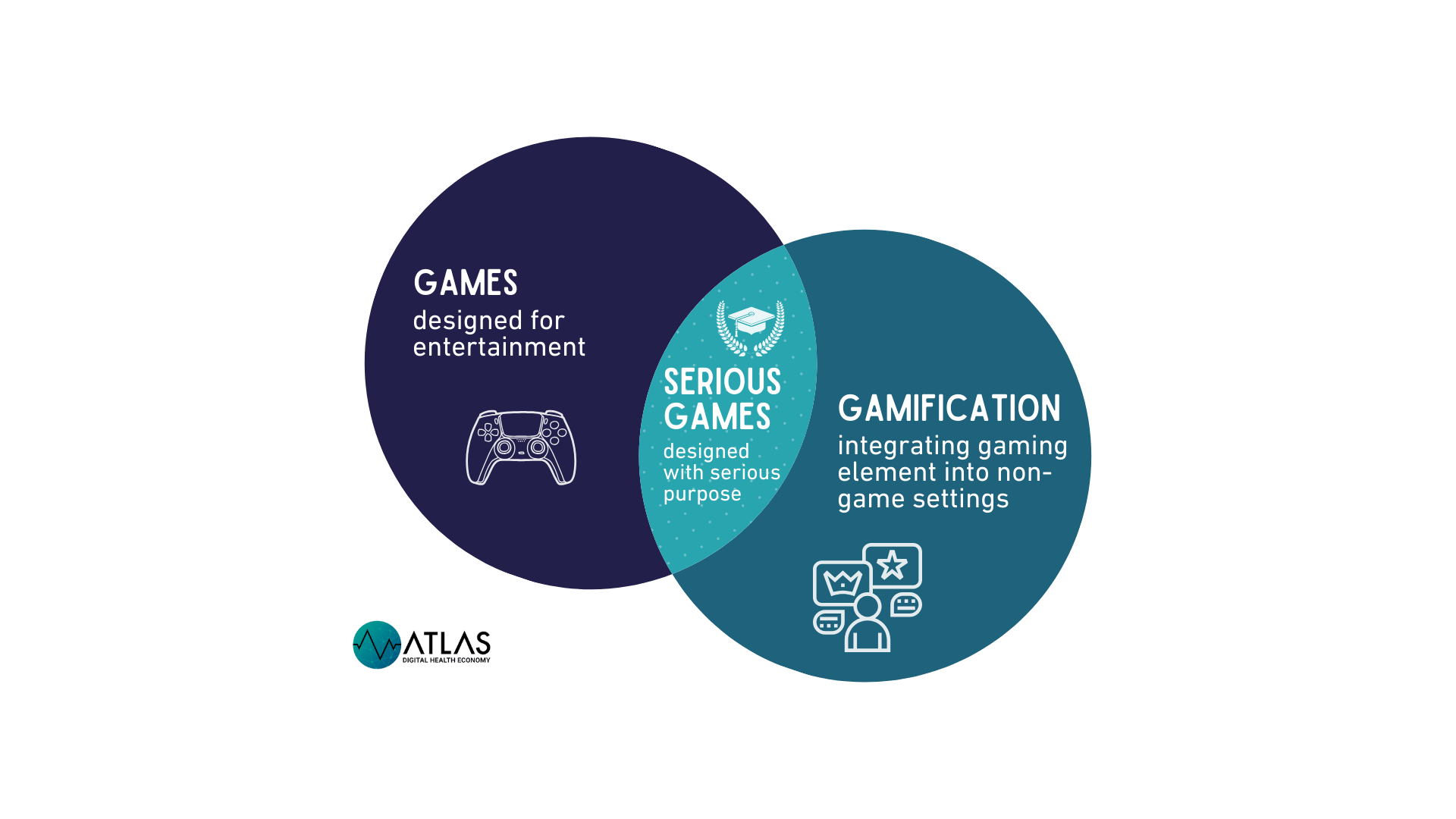
The most relevant game-based approaches are Serious Games (designed with a serious purpose) and GamificationGamification describes the use of game-typical elements in a non-game context. The goal is to change user behavior and increase motivation. This approach is used to make otherwise monotonous processes (e.g., surveys) more engaging, or to sustain user motivation during demanding tasks. Typical game elements include progress indicators, leaderboards,… (using game-like elements in non-game contexts) [3]. Unlike traditional lecture-based instruction, these methods introduce engaging problem-solving and interactive learning experiences [4]. They offer a safe trial-and-error environment for students to develop professional skills, fostering essential teamwork and decision-making abilities [5]. With the emergence of a tech-savvy generation, educators are increasingly integrating game-based learning to optimize learning outcomes [6, 7].
Significant Market Potential for Game-Based Approaches
One recent study from Switzerland sheds light on healthcare workers’ experiences and attitudes toward these game-based educational tools. Katonai et al. (2023) utilized a convenience sampling to recruit 223 healthcare professionals from psychiatry and internal medicine. Data was gathered through an anonymous online questionnaire disseminated among staff at four psychiatric clinics and a general hospital [8].
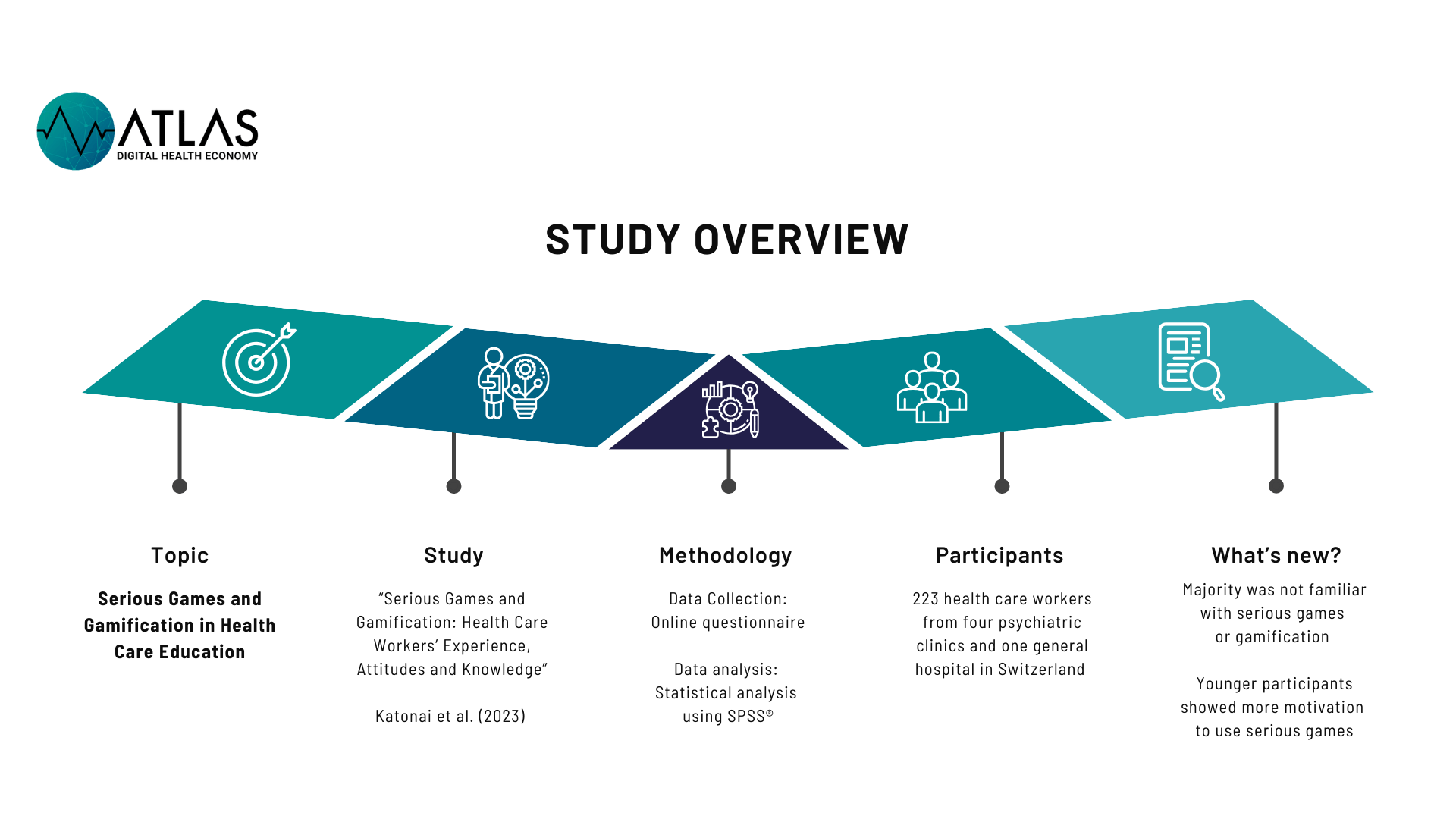
While there is a notable lack of familiarity among some healthcare professionals, the research also indicates a burgeoning interest and positive perception, especially among younger workers, recognizing their benefits for professional growth. Notably, the study’s limitations include its regional focus on german-speaking eastern Switzerland and potential selection bias, with tech-savvy individuals more likely to participate [8].
Economically, the serious games market exhibits robust growth potential. Valued at $5.94 billion in 2020, it is forecasted to expand to $32.72 billion by 2030. This represents a compound annual growth rate (CAGR) of 18.47%, underscoring the sector’s rapid and sustained growth [9]. As a concrete example: The German market alone accounted for about 225 million euros in 2020, approximately 5% of the nation’s overall gaming market [10, 11]. These trends highlight notable investment and leadership opportunities in healthcare education technology for innovative investors and entrepreneurs.
Conclusion
Game-based methods are evolving from simple educational tools to becoming vital in shaping the training of healthcare professionals. These approaches allow educators to innovate in their teaching and integrate gamified elements into their curricula. The highlighted study points to a growing acceptance and positive attitude towards serious games, particularly among younger healthcare workers. For investors and entrepreneurs, this represents an opportunity to lead in an important area of educational and economic growth, aiding in the development of future healthcare professionals while capitalizing on an expanding market.
Related Articles

Contact
E-Mail:
atlas-itg@uni-wh.deInnovation in Healthcare
Alfred-Herrhausen-Straße 50
58448 Witten, Germany