

Global Digi-Health Monitor: Calendar Week 6, 2025
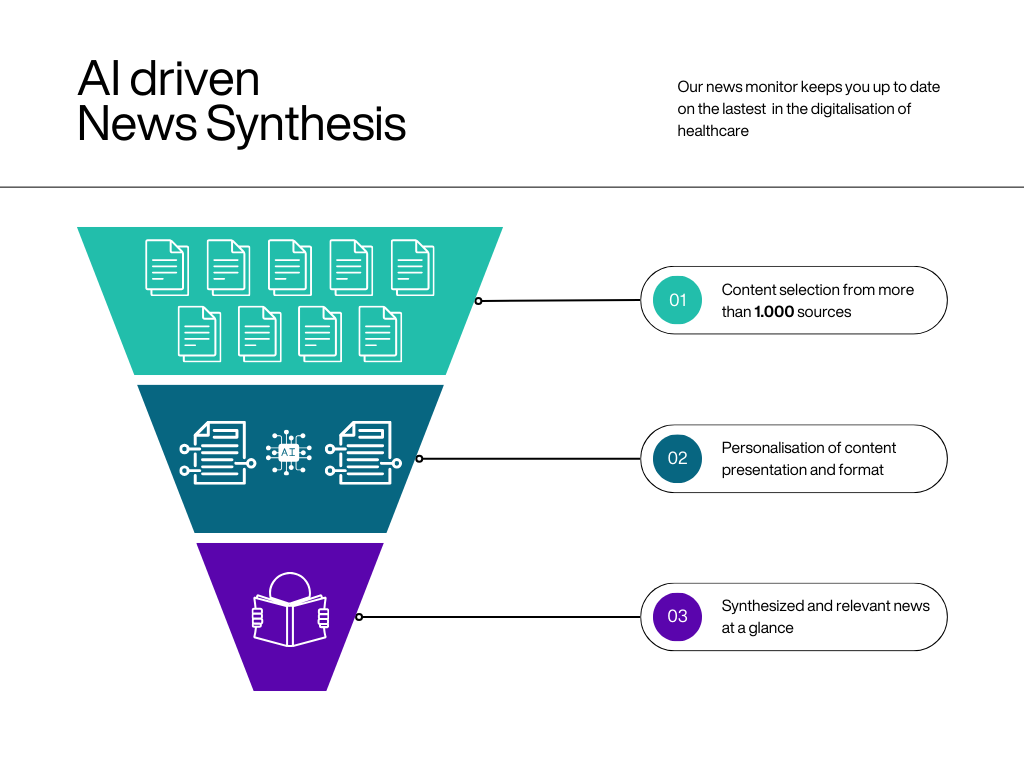
TelehealthTelemedicine encompasses various healthcare delivery concepts characterized by direct patient care across geographical distances or time delays. This includes diagnostic, therapeutic, rehabilitative, and consultative services delivered through information and communication technologies. Particularly with regard to rural areas, telemedicine offers s… Explained in the video. Enters 2.0 Era with IoMT,Based on the Internet of Things (IoT), the Internet of Medical Things (IoMT) specifically describes the development of a digital network within the healthcare market. As with IoT, the focus is on the interaction and communication of products and services—in this case relating to medical resources and health services. An example is the monitoring of… Explained in the video. Gaming, and VRVirtual Reality (VR) offers a unique visualization context that enhances the perception of volumetric details. Unlike conventional monitor-based visualization, where users typically observe three-dimensional (3D) data as passive observers, VR’s immersive experience allows users to enter their data in a spatially realistic way. First-time VR e… Explained in the video. Integration
A new report from Progress reveals how telehealthTelemedicine encompasses various healthcare delivery concepts characterized by direct patient care across geographical distances or time delays. This includes diagnostic, therapeutic, rehabilitative, and consultative services delivered through information and communication technologies. Particularly with regard to rural areas, telemedicine offers s… Explained in the video. is evolving beyond its pandemic-era limitations through next-generation technologies. While 42% of US patients struggle to find quality healthcare providers, emerging solutions like the Internet of Medical ThingsBased on the Internet of Things (IoT), the Internet of Medical Things (IoMT) specifically describes the development of a digital network within the healthcare market. As with IoT, the focus is on the interaction and communication of products and services—in this case relating to medical resources and health services. An example is the monitoring of… Explained in the video. (IoMT),Based on the Internet of Things (IoT), the Internet of Medical Things (IoMT) specifically describes the development of a digital network within the healthcare market. As with IoT, the focus is on the interaction and communication of products and services—in this case relating to medical resources and health services. An example is the monitoring of… Explained in the video. therapeutic gaming, and virtual realityVirtual Reality (VR) offers a unique visualization context that enhances the perception of volumetric details. Unlike conventional monitor-based visualization, where users typically observe three-dimensional (3D) data as passive observers, VR’s immersive experience allows users to enter their data in a spatially realistic way. First-time VR e… Explained in the video. training are transforming digital health delivery. The analysis highlights how wearablesWearables refer to technologies in the form of sensors or mobile applications that collect health data asynchronously and beyond the boundaries of medical care. They include wristbands, smartwatches, and other mobile sensors. These measure and collect data such as blood glucose levels, pulse, or sleep data, and transmit this information either auto… like Apple Watch and Oura Ring enable continuous health monitoring, while FDA-authorized games like EndeavorRx offer novel ADHD treatments. Healthcare organizations are advised to integrate these innovations through robust content management systems that ensure personalized, secure experiences across devices while maintaining regulatory compliance.
Study Examines Mental Health Apps’ Impact on Student Wellness at U of T
A new report from The Varsity explores the complex role of mental health appsHealth apps describe mobile applications used in a health context. The term is broadly defined. Health apps are generally understood to include apps that support users in maintaining their health through automated, mobile data collection. They are found primarily in the areas of prevention and health promotion. Medical apps, which exist as a furthe… in student care, with over 20,000 apps now available and 20 million downloads for popular platforms like Calm and Headspace. While these tools offer accessible support for busy students facing high stress levels, research shows significant challenges with user retention – only 19% of college students continue using downloaded mental health apps.Health apps describe mobile applications used in a health context. The term is broadly defined. Health apps are generally understood to include apps that support users in maintaining their health through automated, mobile data collection. They are found primarily in the areas of prevention and health promotion. Medical apps, which exist as a furthe… The analysis highlights both benefits and limitations: while apps provide affordable, stigma-free entry points to mental healthcare, experts warn against viewing them as complete replacements for professional care. Looking ahead, AIArtificial Intelligence (AI) implies the attempt to transfer human learning and thinking to computers. Computer systems are intended to solve problems—for which a human would require intelligence—using large datasets. In the field of radiology, for example, artificial intelligence can assist physicians in diagnosing findings and detecting abnormali… Explained in the video. advancements may enable more sophisticated tracking through smartphone sensors, though the focus remains on supplementing rather than replacing traditional therapeutic interventions.
Sheba Medical Center’s Innovation Chief Forecasts Healthcare AIArtificial Intelligence (AI) implies the attempt to transfer human learning and thinking to computers. Computer systems are intended to solve problems—for which a human would require intelligence—using large datasets. In the field of radiology, for example, artificial intelligence can assist physicians in diagnosing findings and detecting abnormali… Explained in the video. Trends for 2025
Dr. Eyal Zimlichman, chief innovation officer at Israel’s Sheba Medical Center, outlines three key healthcare technology developments for 2025. Provider-facing AIArtificial Intelligence (AI) implies the attempt to transfer human learning and thinking to computers. Computer systems are intended to solve problems—for which a human would require intelligence—using large datasets. In the field of radiology, for example, artificial intelligence can assist physicians in diagnosing findings and detecting abnormali… Explained in the video. systems will expand to reduce administrative burdens and enhance clinical decision support with specialized foundation models. Patient-facing AIArtificial Intelligence (AI) implies the attempt to transfer human learning and thinking to computers. Computer systems are intended to solve problems—for which a human would require intelligence—using large datasets. In the field of radiology, for example, artificial intelligence can assist physicians in diagnosing findings and detecting abnormali… Explained in the video. will introduce virtual health coaches and mental health support tools, though with slower adoption due to regulatory requirements. In precision medicine,In precision medicine, also known as personalized medicine, the focus is on a patient’s individual characteristics and circumstances. This “tailored therapy” is considered one of the major medical trends of the 21st century.In practice, precision medicine means searching for changes in a patient’s genetic code through geneti… AI-powered digital pathology will enable same-day biomarkerBiomarkers are characteristics that are objectively measurable and can be used as reference indicators for biological processes and disease states in human or animal systems. One example is their use as an indicator of a pharmacological response to a therapeutic intervention. analysis, replacing weeks-long genetic sequencing wait times. Healthcare CIOs are advised to focus on building data infrastructure that enables staff self-service while carefully evaluating AIArtificial Intelligence (AI) implies the attempt to transfer human learning and thinking to computers. Computer systems are intended to solve problems—for which a human would require intelligence—using large datasets. In the field of radiology, for example, artificial intelligence can assist physicians in diagnosing findings and detecting abnormali… Explained in the video. solutions that address workforce shortages.
AIArtificial Intelligence (AI) implies the attempt to transfer human learning and thinking to computers. Computer systems are intended to solve problems—for which a human would require intelligence—using large datasets. In the field of radiology, for example, artificial intelligence can assist physicians in diagnosing findings and detecting abnormali… Explained in the video. Outperforms Clinicians in Patient Portal Communication, Stanford Study Finds
Patients consistently prefer AI-generated responses to medical questions in Electronic Health Records over clinician responses. Led by Dr. Eleni Linos, the research found AIArtificial Intelligence (AI) implies the attempt to transfer human learning and thinking to computers. Computer systems are intended to solve problems—for which a human would require intelligence—using large datasets. In the field of radiology, for example, artificial intelligence can assist physicians in diagnosing findings and detecting abnormali… Explained in the video. responses were longer, more detailed, and demonstrated higher empathy scores compared to typically brief clinician messages. The AIArtificial Intelligence (AI) implies the attempt to transfer human learning and thinking to computers. Computer systems are intended to solve problems—for which a human would require intelligence—using large datasets. In the field of radiology, for example, artificial intelligence can assist physicians in diagnosing findings and detecting abnormali… Explained in the video. system, using a HIPAA-compliant version of ChatGPT, could help address physician burnout while maintaining high-quality patient communication. However, the study raises important questions about workflow adjustments, language accessibility, and the need for safety guidelines as healthcare systems integrate AIArtificial Intelligence (AI) implies the attempt to transfer human learning and thinking to computers. Computer systems are intended to solve problems—for which a human would require intelligence—using large datasets. In the field of radiology, for example, artificial intelligence can assist physicians in diagnosing findings and detecting abnormali… Explained in the video. communication tools. The findings suggest AIArtificial Intelligence (AI) implies the attempt to transfer human learning and thinking to computers. Computer systems are intended to solve problems—for which a human would require intelligence—using large datasets. In the field of radiology, for example, artificial intelligence can assist physicians in diagnosing findings and detecting abnormali… Explained in the video. could become a valuable tool for improving patient satisfaction while reducing clinician workload, particularly given current challenges with healthcare access and extended wait times for appointments.
AIArtificial Intelligence (AI) implies the attempt to transfer human learning and thinking to computers. Computer systems are intended to solve problems—for which a human would require intelligence—using large datasets. In the field of radiology, for example, artificial intelligence can assist physicians in diagnosing findings and detecting abnormali… Explained in the video. System Integrates Multi-Modal Patient Data to Revolutionize Cancer Treatment Decisions
A groundbreaking AIArtificial Intelligence (AI) implies the attempt to transfer human learning and thinking to computers. Computer systems are intended to solve problems—for which a human would require intelligence—using large datasets. In the field of radiology, for example, artificial intelligence can assist physicians in diagnosing findings and detecting abnormali… Explained in the video. model developed by researchers from multiple German institutions can now analyze 350 different patient parameters across 38 tumor types to provide personalized cancer treatment recommendations. Published in Nature Cancer, the study trained on data from 15,000 patients, integrating medical histories, lab values, imaging, and genetic profiles. The system was validated on 3,000 lung cancer cases and uses explainable AIArtificial Intelligence (AI) implies the attempt to transfer human learning and thinking to computers. Computer systems are intended to solve problems—for which a human would require intelligence—using large datasets. In the field of radiology, for example, artificial intelligence can assist physicians in diagnosing findings and detecting abnormali… Explained in the video. (xAI) to make its decision-making process transparent to clinicians. Unlike current rigid cancer staging systems, this approach considers individual factors like sex, nutrition status, and comorbidities to generate comprehensive patient-specific prognoses, marking a significant advancement toward truly personalized cancer care.
Contact
E-Mail:
atlas-itg@uni-wh.deInnovation in Healthcare
Alfred-Herrhausen-Straße 50
58448 Witten, Germany