

AI-Based Clinical Decision Support Systems for Antimicrobial Resistance
The inappropriate use of antibiotics and the resulting Antimicrobial Resistance have a profound impact on both patient care and the economy. While novel technologies like AI-based Clinical Decision Support Systems offer promising solutions to address this issue, the question remains: how can their implementation be optimized?
The Global Threat of Antimicrobial Resistance: Impacts on Health and Economy
Antimicrobial Resistance (AMR) is a critical challenge in patient care. Antibiotics, undeniably among the most life-saving medicines in history, are losing their effectiveness due to the rise of antimicrobial-resistant bacteria (1). More than one million people worldwide die annually from illnesses caused by these resistant pathogens (2), a number projected to increase to several million deaths globally by 2050 (3). This alarming trend is largely driven by the overuse and misuse of antibiotics, not only in healthcare but also in industrial and agricultural contexts (4). Beyond its profound impact on patient outcomes, AMR also inflicts significant economic harm. Estimates range between two trillion and six trillion USD in losses of world output annually, especially affecting low-income countries (5).
Targeting Antimicrobial Resistance with Advanced AI-based solutions
Various programs on the adequate prescription of antibiotics have been introduced to address the issue of AMR, but their success has been limited so far. Additionally, the lack of economic incentives has led to stagnation in the development of new antibiotics in recent years. Moreover, newly developed antibiotics should be used as cautiously as possible (6).
Existing studies suggest that innovative solutions, such as Clinical Decision Support Systems (CDSS), which go beyond traditional if-then logic and incorporate advanced technologies like Artificial IntelligenceKünstliche Intelligenz (KI) impliziert den Versuch menschliches Lernen und Denken dem Computer anzueignen. Problemstellungen sollen von Computersystemen mit Hilfe großer Datenbestände gelöst werden, für die ein Mensch seine Intelligenz benötigt. Im Bereich der Radiologie beispielsweise kann die künstliche Intelligenz Ärzte bei der Befundung unterst… Im Video erklärt.zum Glossar (AI),Künstliche Intelligenz (KI) impliziert den Versuch menschliches Lernen und Denken dem Computer anzueignen. Problemstellungen sollen von Computersystemen mit Hilfe großer Datenbestände gelöst werden, für die ein Mensch seine Intelligenz benötigt. Im Bereich der Radiologie beispielsweise kann die künstliche Intelligenz Ärzte bei der Befundung unterst… Im Video erklärt.zum Glossar could assist clinicians in making decisions about antibiotic prescription and positively impact patient treatment outcomes (7).
In a recent study, Tokgöz et al. investigated how the three domains Human, Organization, and Technology affect the implementation of AI-based CDSS (8).
Survey on AI-Based Clinical Decision Support Systems in German Hospitals
Tokgöz et al. conducted an online survey with 118 hospital management-level professionals in Germany. Participants were asked to:
- List challenges related to antibiotics prescription,
- Describe whether their hospitals were using AI-based Clinical Decision Support Systems for antibiotics prescription,
- Describe benefits related to AI-based CDSS,
- Rate their knowledge regarding AI-based CDSS (8).
Challenges in Antibiotics Prescription in Germany and Potentials of AI-Based Clinical Decision Support Systems
When asked about the challenges in antibiotic prescription, 48% of respondents cited a lack of expertise, 28% pointed to delays in laboratory tests and results, and eight percent mentioned insufficient information on local resistance patterns (8).
Only five percent of the participants stated that their hospitals were already using AI-based CDSS for antibiotics prescription (8).
The majority of participants agreed that AI-based CDSS positively impact antibiotic prescription for both patients and clinicians. Key benefits include improved treatment safety, guidance in cases of uncertainty, more standardized procedures, and enhanced workflows. However, participants also noted the potential risk of professionals becoming dependent on these systems (8).
The study revealed that participants had knowledge gaps regarding AI-based CDSS, particularly in areas such as their functionalities, potential applications, and integration into workflows. These knowledge gaps were identified as key barriers hindering the implementation of AI-based CDSS (8).
Relevant Implementation Factors for AI-Based Clinical Decision Support Systems within the HOT-fit Model
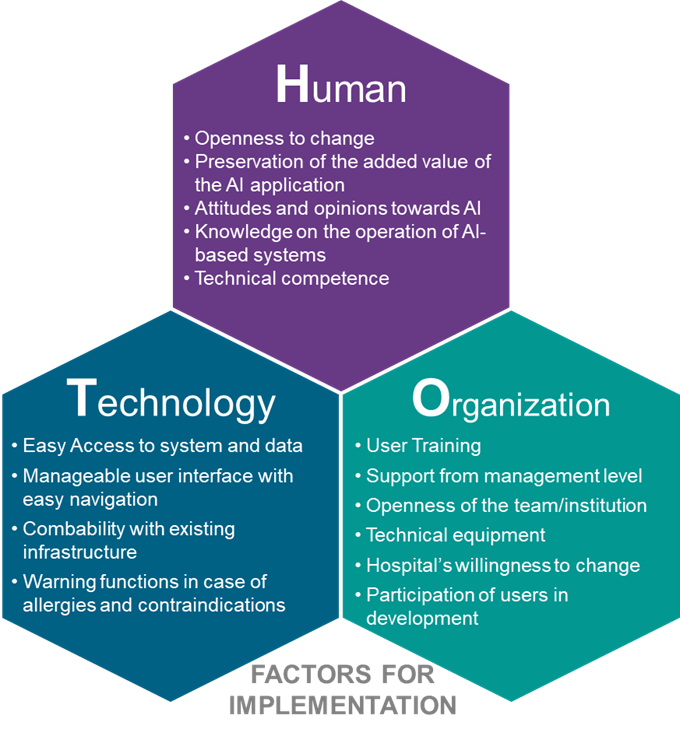
Figure 1 illustrates the implementation factors that survey participants rated as most relevant.
The Sociological and Organizational Interplay is Key for Technology Implementation
Hospital management recognizes the importance of addressing sociological and organizational factors when implementing AI-based CDSS for antibiotic prescription. Factors such as a lack of knowledge about the perceived usefulness of these systems and their technical complexity must be taken into account (8). A comprehensive and tailored introduction for user groups can help to address these challenges (9).
The ease of technical integration, well-defined guidance and regulations, and targeted training programs will be critical for the successful adoption of AI-based CDSS, not only for antibiotic prescription but also across the diverse domains within the hospital setting.
References
Also read: AI-Based Symptom Checkers in Medical Self-Diagnosis

Kontakt
E-Mail:
atlas-itg@uni-wh.deInnovation im Gesundheitswesen
Alfred-Herrhausen-Straße 50
58448 Witten, Deutschland