

Perceptions matter: Nurses’ attitudes toward robotics are critical for its adoption
Introduction
The increasing life expectancy amplifies the demand for specialized care, posing financial and other complex challenges for its provision, whether familial, voluntary, or professional. With the latest developments in Big DataBig Data beschreibt große Datenmengen, die durch eine in vergangenen Jahren gesteigerte Informationsgenerierung entstehen und für unterschiedlichste Zwecke ausgewertet werden können. Datenquellen können mobile und stationäre Alltagsgeräte sein, wie z.B. Smartphones, Tablets oder Smart-Devices wie Aktivitätstracker. Fünf zentrale Aspekte bestimmen d…zum Glossar and Artificial Intelligence,Künstliche Intelligenz (KI) impliziert den Versuch menschliches Lernen und Denken dem Computer anzueignen. Problemstellungen sollen von Computersystemen mit Hilfe großer Datenbestände gelöst werden, für die ein Mensch seine Intelligenz benötigt. Im Bereich der Radiologie beispielsweise kann die künstliche Intelligenz Ärzte bei der Befundung unterst… Im Video erklärt.zum Glossar assistive robotic systems are gaining importance in supporting these growing care needs and emerging as a critical innovation in nursing [1, 2]. Correspondingly, the global market for robotic nurse assistants is anticipated to grow from USD 1.0 billion in 2022 to exhibit a compound annual growth rate (CAGR) of 14.8% by 2030 [3]. The following illustration provides an overview of key application fields:
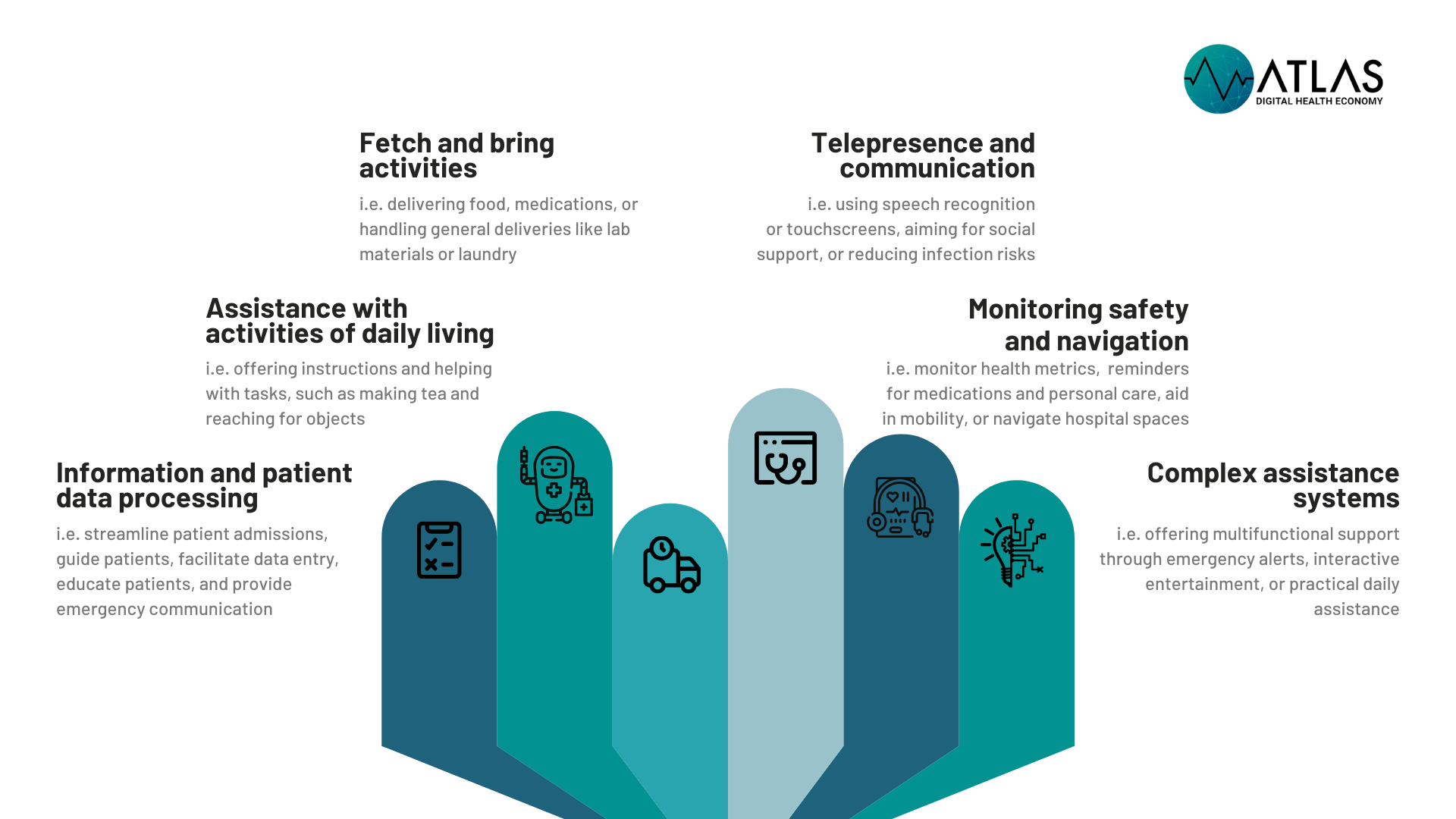
Applications of assistive robotic systems in nursing care according to Ohneberg et al. (2023) [4] (own illustration)
Healthcare robots are generally categorized into two types: assistive robots, which focus on physical tasks and patient monitoring, and social assistive robots, which offer emotional and cognitive support to vulnerable groups like children, older people, and disabled individuals [5]. Despite their potential, international meta-studies indicate varied perceptions of health professionals towards assistive robot applications, with notable skepticism among individuals [1, 6].
Research indicates that a lack of digital knowledge and negative attitudes toward technology among nurses are barriers to its adoption [1, 7, 8]. One new study from Taiwan is the first to investigate the impact of assistive robots‘ perceived benefits and maintenance requirements on nurses‘ engagement in working with such technology [9].
Perceived robot benefits outweigh maintenance barriers
Liao et al. (2023) utilized a two-wave follow-up study design to survey 358 full-time operating room nurses at a large medical center in Taiwan. The facility prominently integrates assistive robots that carry equipment and medical materials in various operating rooms and boasts an in-house IT team for robot maintenance. This study focuses on exploring the influence of robot benefits, maintenance requirements, and the personal innovativeness of nurses on their attitudes toward robots, as well as their engagement in nurse-robot interactions [9].
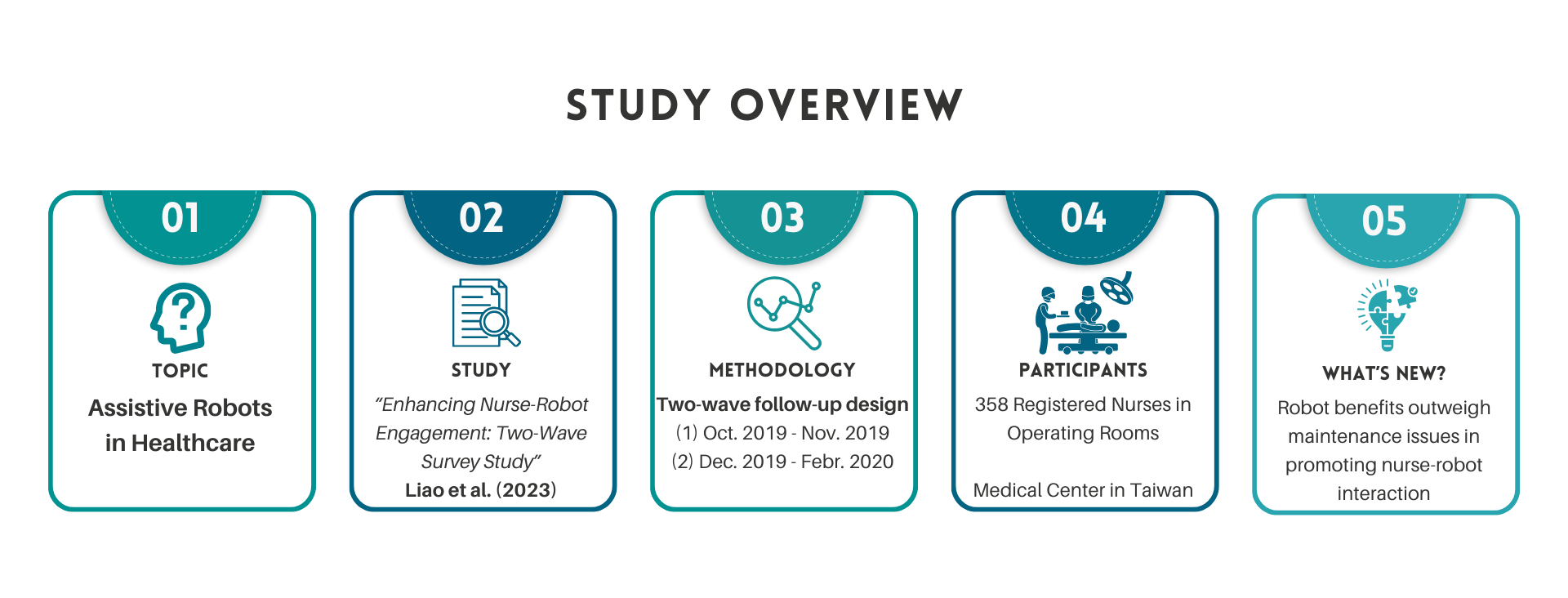 The results indicate that the perceived benefits, such as improved efficiency through time and energy savings, along with a positive attitude towards robots, are crucial in fostering nurses‘ engagement with them. The study also finds that maintenance efforts that nurses invest in operating robots do not significantly affect nurses‘ attitudes, and similarly, the individual propensity of nurses to adopt new information technologies, referred to as personal innovativeness, does not notably affect their engagement with robots [9].
Facilitating Nurse-Robot Engagement: A focus on training and operational efficiency
The insights gained may apply to similar international healthcare settings. The presented study highlights the significance of perceived robot benefits in fostering nurse-robot interaction. The researchers focused on two key benefits: saving time and reducing physical effort. It is recommended that developers of healthcare robots prioritize these aspects in both design and communication strategies [9].
Hospital management should emphasize the benefits of robots and offer practical training for nurses on their use and maintenance to increase engagement [9]. Effective integration of such technology is supported by customized digital training, structured on-the-job training, and strong management support [7]. Additionally, encouraging tech-savvy healthcare professionals to lead the adoption of these technologies can promote broader use in hospital settings [9].
Further readings in German: Humanoide Roboter in der Altenpflege: Zwischen Akzeptanz und Zurückhaltung

Kontakt
E-Mail:
atlas-itg@uni-wh.deInnovation im Gesundheitswesen
Alfred-Herrhausen-Straße 50
58448 Witten, Deutschland